
Prompt Engineering Techniques: The Ultimate Guide for 2026
Published: April 10, 2026
Introduction
Artificial intelligence has fundamentally changed how we work, create, and solve problems. But here's the truth most people overlook: the quality of your AI output is only as good as the quality of your input. That's where prompt engineering comes in.
Prompt engineering is the practice of designing, refining, and optimizing the instructions you give to a large language model (LLM) — like GPT-4, Claude, or Gemini — to get the most accurate, relevant, and useful responses possible. Think of it as the art and science of talking to AI effectively.
Whether you're a developer building AI-powered applications, a marketer generating content at scale, or a curious professional trying to get more out of ChatGPT, understanding prompt engineering techniques will dramatically improve your results. In this guide, we'll break down the most powerful techniques, explain the concepts behind them, and give you concrete, copy-ready examples you can use right away.
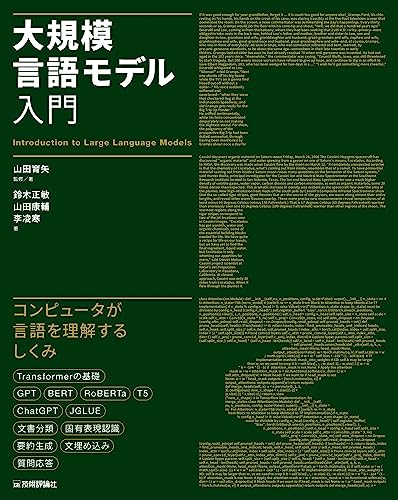
Sponsored
大規模言語モデル入門
¥3,520
What Is Prompt Engineering and Why Does It Matter?
A prompt is simply the text input you send to an AI model. It could be a question, an instruction, a few example sentences, or a complex multi-step command. The model reads your prompt and generates a response based on patterns learned during training.
The reason prompt engineering matters so much is that LLMs are probabilistic systems — they don't look up answers in a database. Instead, they predict the most likely next word based on context. By shaping that context carefully, you guide the model toward better, more reliable outputs.
Poor prompt:
"Write something about marketing."
Well-engineered prompt:
"Write a 300-word LinkedIn post targeting B2B SaaS founders about why email marketing still outperforms social media in 2026. Use a confident, data-driven tone and end with a clear call to action."
The difference in output quality is night and day.
Core Prompt Engineering Techniques
1. Zero-Shot Prompting
Zero-shot prompting means asking the model to perform a task without providing any examples. You rely entirely on the model's pre-trained knowledge and your clear instructions.
When to use it: For straightforward tasks where the model already has strong domain knowledge.
Example:
"Summarize the following article in three bullet points: [paste article text here]"
Zero-shot prompting works surprisingly well for common tasks like summarization, translation, classification, and basic Q&A. The key is to be specific about format, tone, and length.
2. Few-Shot Prompting
Few-shot prompting involves providing the model with a handful of input-output examples before asking it to perform the actual task. This technique dramatically improves consistency and accuracy, especially for niche or custom tasks.
When to use it: When you need outputs in a very specific format, style, or domain that the model might not nail on its own.
Example:
Classify the sentiment of these customer reviews as Positive, Negative, or Neutral.
Review: "The product arrived on time and works perfectly." Sentiment: Positive
Review: "Completely broke after one use. Total waste of money." Sentiment: Negative
Review: "It's okay, nothing special." Sentiment: Neutral
Review: "I was skeptical at first, but this exceeded all my expectations!" Sentiment:
The model now has clear context for what you want and reliably outputs "Positive."
3. Chain-of-Thought (CoT) Prompting
Chain-of-thought prompting encourages the model to think step by step before arriving at a final answer. This technique is particularly powerful for complex reasoning tasks — math problems, logic puzzles, multi-step analysis, and more.
Research from Google Brain showed that CoT prompting significantly improves performance on reasoning benchmarks compared to standard prompting.
How to trigger it:
Simply add phrases like:
- "Let's think step by step."
- "Walk me through your reasoning."
- "Break this problem down into steps before answering."
Example:
A train leaves City A at 9:00 AM traveling at 60 mph. Another train leaves City B (300 miles away) at 10:00 AM traveling at 90 mph toward City A. At what time do they meet? Let's think step by step.
Without CoT, models often get this wrong. With it, they correctly work through the algebra and arrive at the right answer.
4. Role Prompting (Persona Assignment)
Role prompting tells the model to adopt a specific persona or expert role before responding. This shifts the model's "perspective" and often produces more authoritative, specialized responses.
Example:
"You are a senior cybersecurity analyst with 15 years of experience in enterprise security. Review the following network configuration and identify potential vulnerabilities: [configuration details]"
This technique is especially useful for technical domains, creative writing, and customer service simulations.
5. Instruction Tuning and Formatting Directives
One of the most underrated techniques is being explicit about format. LLMs are flexible — they'll match whatever structure you specify.
Formatting cues you can use:
- "Respond in JSON format."
- "Use a numbered list."
- "Write in markdown with H2 and H3 headings."
- "Limit your response to 200 words."
- "Use a formal academic tone."
Example:
"List the top 5 Python libraries for data science. Format your response as a markdown table with three columns: Library Name, Primary Use Case, and GitHub Stars (approximate)."
This produces clean, structured output that's immediately usable in documentation or reports.
6. Self-Consistency Prompting
Self-consistency is an advanced technique where you prompt the model to generate multiple independent answers to the same question, then select the most common or logically consistent answer. It's especially useful when accuracy is critical.
In practice, you might run the same prompt three to five times (or use temperature settings to get varied outputs) and then compare the results. This is commonly used in automated pipelines to reduce hallucinations.
7. Retrieval-Augmented Prompting (RAG)
Retrieval-Augmented Generation (RAG) is a technique where you inject relevant external information directly into your prompt before asking the model a question. Instead of relying solely on the model's training data (which has a knowledge cutoff), you feed it fresh, specific documents.
Example workflow:
- User asks: "What are our company's refund policies?"
- Your system retrieves the relevant policy document from a database.
- The prompt becomes: "Using the following policy document: [document text], answer this customer question: What are our refund policies?"
RAG dramatically reduces hallucinations and keeps responses grounded in verified information. It's the backbone of most enterprise AI chatbots today.
8. Prompt Chaining
Prompt chaining breaks a complex task into a series of smaller, sequential prompts where the output of one becomes the input of the next. This mimics a workflow and allows for more controlled, high-quality results.
Example chain for blog writing:
- Step 1: "Generate 10 compelling blog post ideas about remote work productivity."
- Step 2: "Pick idea #3 and create a detailed outline with 5 main sections."
- Step 3: "Write Section 2 of the outline in full, targeting working professionals aged 25–40."
Each step refines the output, producing a final result far superior to what a single prompt could achieve.
Common Prompt Engineering Mistakes to Avoid
Even experienced users fall into these traps:
- Being too vague: "Write something good" gives the model nothing to work with.
- Overloading the prompt: Cramming 10 different instructions into one prompt often leads to incomplete responses.
- Ignoring the system prompt: In API usage, the system prompt sets the model's overall behavior. Don't neglect it.
- Not iterating: Treat prompt writing like code — test, refine, and improve.
- Assuming the model remembers: Each conversation turn is its own context. If you need consistency, restate key information.
Best Practices for Effective Prompt Engineering
| Practice | Why It Matters |
|---|---|
| Be specific and concrete | Reduces ambiguity and improves relevance |
| State the audience | Helps calibrate tone and complexity |
| Specify output format | Makes results immediately usable |
| Use delimiters (```, ###) | Clearly separates instructions from content |
| Test multiple variations | Identifies the most reliable phrasing |
| Start simple, then add complexity | Easier to debug and refine |
The Future of Prompt Engineering
As AI models become more capable, some argue that prompt engineering will become less necessary — that future models will "just understand" what you want. But the evidence in 2026 suggests the opposite: as models grow more powerful, the ceiling of what's possible with great prompting rises too.
Multimodal prompting (combining text, images, audio, and code), agentic prompting (where models autonomously take actions and loop back), and dynamic few-shot selection (automatically choosing the best examples for each query) are all rapidly evolving frontiers.
Prompt engineers are increasingly valued in organizations that take AI seriously — and for good reason.
Conclusion
Prompt engineering is one of the most high-leverage skills you can develop in the age of AI. By mastering techniques like zero-shot and few-shot prompting, chain-of-thought reasoning, role prompting, RAG, and prompt chaining, you unlock a dramatically higher level of performance from any AI model you work with.
The best part? You don't need a computer science degree. You need curiosity, a willingness to experiment, and a solid understanding of the principles covered in this guide.
Here's your call to action: Pick one technique from this article — start with chain-of-thought or few-shot prompting — and apply it to a real task you're working on today. Compare the results against your usual approach. The difference will speak for itself.
If you found this guide helpful, share it with a colleague who's still asking AI

