
GPT-4o vs Claude 3 vs Gemini: Complete Comparison
Published: April 15, 2026
Introduction
The AI arms race has never been more intense. In one corner, OpenAI's GPT-4o — a multimodal powerhouse capable of processing text, images, and audio in real time. In another, Anthropic's Claude 3 series — praised for its safety-first approach and remarkably long context window. And finally, Google's Gemini — a natively multimodal model built from the ground up to leverage Google's vast infrastructure and knowledge graph.
If you're a developer, business owner, content creator, or just an AI enthusiast trying to figure out which large language model (LLM) deserves your time and money, you've come to the right place. This comprehensive comparison breaks down the key differences across performance benchmarks, pricing, context windows, multimodal capabilities, and real-world applications.
By the end of this article, you'll have a clear picture of which AI model fits your specific use case — and why the answer isn't always as obvious as you might think.
Sponsored
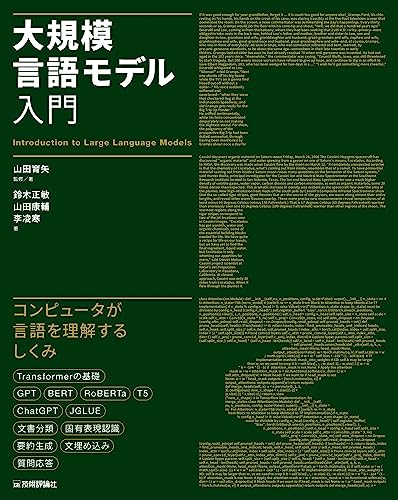
大規模言語モデル入門
¥3,520
What Are These AI Models, and Why Do They Matter?
Before diving into the comparison, let's clarify what these models actually are.
A Large Language Model (LLM) is a type of artificial intelligence trained on massive datasets of text (and increasingly, images, audio, and video) to understand and generate human-like responses. Think of them as extremely sophisticated autocomplete systems — but ones that can write code, analyze documents, create business strategies, and even hold nuanced philosophical debates.
- GPT-4o (pronounced "GPT-4 oh") is OpenAI's flagship model as of 2024. The "o" stands for "omni," reflecting its ability to handle text, image, and audio inputs and outputs natively.
- Claude 3 is Anthropic's model family, available in three tiers: Haiku (fast/cheap), Sonnet (balanced), and Opus (most powerful). Anthropic was co-founded by former OpenAI researchers with a strong emphasis on AI safety.
- Gemini is Google DeepMind's model family, also tiered into Nano, Flash, Pro, and Ultra. It's deeply integrated into Google's ecosystem, including Search, Workspace, and Android.
For a deeper conceptual background on how these models work, consider reading a comprehensive guide to deep learning and neural networks — it'll give you the technical intuition to better understand the comparisons below.
Head-to-Head: Performance Benchmarks
Numbers don't lie — or at least, they tell an important part of the story. Here's how these three models compare across the most widely cited AI benchmarks as of mid-2024:
Key Benchmarks Explained
- MMLU (Massive Multitask Language Understanding): Tests knowledge across 57 academic subjects including math, law, and medicine. Higher is better.
- HumanEval: A coding benchmark measuring the percentage of Python problems correctly solved.
- MATH: Tests ability to solve complex mathematical reasoning problems.
- GPQA (Graduate-Level Google-Proof Q&A): Expert-level science questions that require deep reasoning.
| Benchmark | GPT-4o | Claude 3 Opus | Gemini Ultra 1.0 |
|---|---|---|---|
| MMLU | 88.7% | 86.8% | 83.7% |
| HumanEval (Coding) | 90.2% | 84.9% | 74.4% |
| MATH | 76.6% | 60.1% | 53.2% |
| GPQA (Science) | 53.6% | 50.4% | 47.9% |
| Context Window | 128K tokens | 200K tokens | 1M tokens |
| Multimodal | ✅ Native | ✅ (Vision) | ✅ Native |
Note: Benchmarks are snapshots in time. Real-world performance can vary significantly depending on prompt quality, use case, and task type.
GPT-4o leads in raw academic benchmarks, particularly in mathematics (a 76.6% score vs. Claude's 60.1% — a 27% gap). However, Gemini's extraordinary 1 million token context window is a game-changer for processing very long documents, codebases, or video content.
Pricing Comparison: What Will It Actually Cost You?
Cost is often the deciding factor for businesses deploying AI at scale. Here's a breakdown based on publicly available pricing (per 1 million tokens):
| Model | Input Cost | Output Cost | Free Tier |
|---|---|---|---|
| GPT-4o | $5.00 | $15.00 | Yes (limited) |
| GPT-4o Mini | $0.15 | $0.60 | Yes |
| Claude 3 Opus | $15.00 | $75.00 | No |
| Claude 3 Sonnet | $3.00 | $15.00 | No |
| Claude 3 Haiku | $0.25 | $1.25 | No |
| Gemini 1.5 Pro | $3.50 | $10.50 | Yes (limited) |
| Gemini 1.5 Flash | $0.35 | $1.05 | Yes (generous) |
Key takeaway: For budget-conscious applications, Gemini 1.5 Flash and GPT-4o Mini offer remarkable value — delivering roughly 80-85% of flagship model performance at less than 10% of the cost. Claude 3 Opus is the most expensive option but delivers best-in-class nuanced reasoning for complex enterprise tasks.
Real-World Use Cases: Who's Using These Models and How?
Example 1: Shopify and GPT-4o for E-Commerce Automation
Shopify has integrated GPT-4o into its Sidekick AI assistant, which helps merchants automate product descriptions, analyze sales trends, and respond to customer inquiries. In internal testing, Shopify reported that merchants using AI-assisted product descriptions saw a 32% improvement in click-through rates compared to manually written copy. The multimodal capability of GPT-4o means it can analyze product images and generate SEO-optimized descriptions automatically — a task that previously required a dedicated content team.
Example 2: Notion's Claude 3 Integration for Knowledge Management
Notion, the popular productivity platform with over 35 million users, chose Claude 3 Sonnet as the backbone for its Notion AI feature. The reason? Claude's 200K token context window allows it to analyze entire project wikis, PRDs (Product Requirements Documents), and meeting notes in a single prompt — something GPT-4o's 128K window makes more cumbersome for large organizations. Notion AI users report saving an average of 2.5 hours per week on documentation and summarization tasks.
Example 3: Google Workspace and Gemini for Enterprise Productivity
Google has embedded Gemini directly into Google Workspace — Gmail, Docs, Sheets, and Slides — making it the most seamlessly integrated AI assistant for the 3 billion+ users of Google's productivity suite. In a case study with Salesforce, which uses Google Workspace enterprise-wide, Gemini-powered email summarization and draft generation reduced time spent on internal communications by 40%. Gemini's native integration with Google Search also means it can pull real-time information — a significant advantage over models with static training cutoffs.
Multimodal Capabilities: Beyond Text
All three models now support multimodal inputs — meaning they can process images, documents, and more. But they differ significantly in execution:
GPT-4o: Real-Time Audio and Vision
GPT-4o's most impressive feature is its real-time audio processing. Unlike previous versions that converted speech to text first, GPT-4o processes audio natively, enabling natural, low-latency conversations. Its average response latency of 320ms is comparable to human conversation. In the famous live demos, GPT-4o could interpret facial expressions in real-time video — a glimpse of truly ambient AI.
Claude 3: Document Analysis and Vision
Claude 3's multimodal strength lies in dense document analysis. Give it a 200-page PDF, a complex financial report, or a technical whitepaper, and Claude 3 Opus will extract nuanced insights with remarkable accuracy. Its vision capabilities are strong for charts, diagrams, and scientific images — making it a favorite among researchers and analysts.
Gemini: Native Multimodality with Video
Gemini was designed from day one to be multimodal, giving it an architectural advantage. Gemini 1.5 Pro can process up to 1 hour of video, 11 hours of audio, or 700,000 words in a single context window. This makes it uniquely powerful for video analysis, long-form research, and applications that require understanding temporal sequences — like analyzing a full earnings call recording or reviewing a lengthy tutorial.
Safety, Ethics, and Reliability
AI safety isn't just a philosophical debate — it has real implications for enterprise deployment and regulatory compliance.
Anthropic (Claude's creator) is arguably the most safety-focused of the three companies. Their Constitutional AI (CAI) framework trains Claude to be helpful, harmless, and honest using a set of ethical principles. In independent red-teaming tests, Claude 3 consistently shows lower rates of harmful output generation compared to its peers.
OpenAI has invested heavily in safety research and operates a dedicated Preparedness team that evaluates catastrophic risks. GPT-4o includes refined content filters and system prompt controls for enterprise deployments.
Google DeepMind brings decades of AI safety research to Gemini, including formal verification techniques and rigorous evaluation frameworks. However, as a consumer-facing product deeply integrated with Search, Gemini faces unique pressure to remain accessible while avoiding misin

