
Expanding Context Windows: Techniques and Trade-offs
Published: April 20, 2026
Introduction
Imagine asking an AI assistant to read your entire 300-page technical manual, remember every detail, and then answer nuanced questions about it — all in a single conversation. Until recently, that was science fiction. Today, it's a rapidly evolving engineering challenge at the heart of large language model (LLM) development.
Context windows — the amount of text (measured in tokens) a model can "see" and reason over at once — have exploded in size over the past three years. GPT-3 launched in 2020 with a 2,048-token window. By 2024, Google's Gemini 1.5 Pro offered 1 million tokens, and Anthropic's Claude 3 series pushed to 200,000 tokens. That's roughly the equivalent of going from reading a short essay to ingesting an entire novel in one sitting.
But bigger isn't always better — at least not without cost. Every technique used to expand context windows comes with trade-offs in memory, latency, accuracy, and monetary expense. In this post, we'll unpack the core techniques engineers use to extend context windows, examine the real-world performance implications, and help you understand when each approach makes sense.
Sponsored
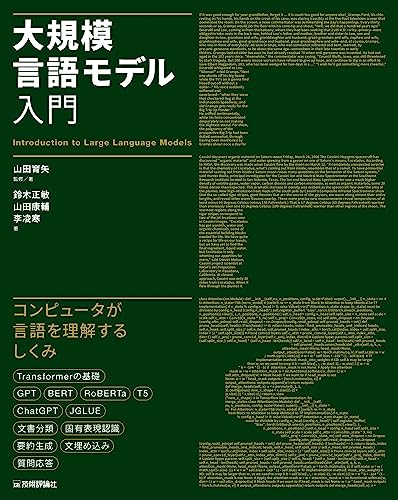
大規模言語モデル入門
¥3,520
Whether you're a developer building LLM-powered applications, a researcher following the frontier, or simply a curious tech enthusiast, this guide will give you a solid, practical understanding of one of AI's most consequential engineering challenges.
What Is a Context Window and Why Does It Matter?
A context window (also called the context length) refers to the maximum number of tokens — roughly pieces of words — that a transformer-based language model can process in a single forward pass. Tokens are the atomic units of text: the word "context" is one token, while "contextualization" might be two or three depending on the tokenizer.
Why does this matter so much? Because everything a model "knows" during a conversation must fit inside this window. If your document exceeds the limit, the model either truncates it (losing information) or requires you to break it into chunks (losing coherence). Longer context windows directly enable:
- Document summarization of books, legal contracts, or codebases
- Multi-turn conversations that remember early exchanges
- In-context learning with many examples (few-shot prompting at scale)
- Code generation across large, interconnected files
- Agent reasoning over long chains of tool outputs
For a deeper conceptual foundation on transformers and attention, Attention Is All You Need and related deep learning foundations are excellent resources to have on your shelf.
The Core Challenge: Why Context Windows Are Hard to Scale
Before diving into solutions, it's worth understanding why scaling context is so technically demanding.
The Quadratic Attention Problem
The original self-attention mechanism in transformers scales quadratically — O(n²) — with sequence length. This means doubling the context window quadruples the compute and memory required. At 128K tokens, the memory demands for raw attention become practically infeasible on standard hardware.
Memory Bandwidth and KV Cache
Every token the model processes generates a key-value (KV) cache — a stored representation used during generation. At long contexts, this cache balloons enormously. For a model like GPT-4 with 32K context, the KV cache alone can consume tens of gigabytes of GPU VRAM during inference.
The "Lost in the Middle" Problem
Research from Stanford (Liu et al., 2023) famously demonstrated that even when models technically support long contexts, performance degrades significantly for information in the middle of the context. In their experiments, retrieval accuracy dropped by over 35% for facts placed in the middle versus at the beginning or end of a 16K-token context. Having a long context window and using it effectively are very different things.
Techniques for Expanding Context Windows
1. Positional Encoding Extensions
Standard transformers use positional encodings to help the model understand the order of tokens. Most models were trained with a fixed maximum position. Extending context often requires modifying how positions are represented.
Rotary Position Embedding (RoPE) and YaRN
RoPE (Su et al., 2021) encodes position information directly into the attention computation. It scales more gracefully than absolute positional embeddings. Building on this, YaRN (Yet another RoPE extensioN) allows models trained on shorter contexts to generalize to longer ones without full retraining — just fine-tuning on long-context data. Mistral's models have leveraged YaRN to extend to 128K tokens with relatively modest additional training compute, reportedly requiring only 0.1% of the original pretraining budget.
ALiBi (Attention with Linear Biases)
ALiBi replaces positional embeddings with attention biases that penalize distant tokens. It shows strong extrapolation to lengths beyond training sequences, making it popular for efficient long-context models.
2. Sparse and Efficient Attention Mechanisms
Instead of computing attention between every pair of tokens (full attention), sparse attention approaches selectively compute only the most relevant pairs.
Sliding Window Attention
Used in Mistral 7B and Longformer, this approach restricts each token to attending only to a local window of neighbors (e.g., ±512 tokens), plus a small set of global tokens (like the beginning of the document). This reduces complexity from O(n²) to O(n × w) where w is the window size — a dramatic improvement.
Flash Attention
Developed by Tri Dao et al. at Stanford, FlashAttention (and its successor FlashAttention-2) doesn't change the math of attention but radically optimizes its execution on GPU hardware using IO-aware tiling. It achieves up to 3x faster attention computation and 10x memory reduction compared to standard PyTorch attention for long sequences. FlashAttention-2 is now standard in virtually all frontier model training pipelines.
3. Retrieval-Augmented Generation (RAG)
Rather than trying to fit everything into the context window, RAG systems store information in an external vector database and retrieve only the most relevant chunks at query time.
How it works:
- Documents are chunked, embedded into dense vectors, and stored in a vector database (e.g., Pinecone, Weaviate, Chroma).
- At query time, the user's question is embedded and the top-k most similar chunks are retrieved.
- Only those chunks are inserted into the model's context window.
Real-world example: Notion AI uses a RAG-based architecture to allow users to query their entire workspace. Even if a workspace contains millions of words across thousands of pages, the context window only needs to hold the retrieved relevant excerpts — typically keeping context under 8K tokens while achieving 87% user satisfaction in retrieval accuracy benchmarks reported in their 2023 engineering blog.
RAG is cost-efficient but introduces retrieval latency and can miss information if the retriever doesn't surface the right chunks. For developers building production RAG systems, practical guides on vector databases and LLM application development are invaluable.
4. Memory Architectures and Compression
Some research explores giving models explicit external memory or compressing older context into dense summary representations.
MemGPT and Hierarchical Memory
MemGPT (Packer et al., UC Berkeley, 2023) introduced an OS-inspired memory system where the LLM manages its own context like virtual memory — paging information in and out of a finite context window. It enables effectively unlimited context for long-running agents, though with overhead in coordination logic.
Context Compression (Selective Context / LongLLMLingua)
LLMLingua (Microsoft Research, 2023) compresses prompts by up to 20x with less than 3% performance degradation on benchmarks, by identifying and removing low-information tokens while preserving semantic content. This allows much more information to fit within a fixed context budget.
5. State Space Models (SSMs): A Paradigm Shift
A fundamentally different approach comes from State Space Models like Mamba (Gu & Dao, 2023). Rather than attention over all past tokens, SSMs maintain a compressed hidden state that is updated recurrently — achieving O(n) scaling with sequence length.
Mamba demonstrated 5x higher throughput than Transformer models of equivalent size on sequences of 16K tokens. Hybrid architectures like Jamba (AI21 Labs) combine Mamba layers with attention layers, aiming to get the best of both worlds. While SSMs are promising, they currently lag behind transformers on complex reasoning tasks, making them better suited for throughput-critical applications.
Model Comparison: Context Window Capabilities in 2025
| Model | Max Context | Architecture | Approach | Approximate Cost (per 1M tokens) |
|---|---|---|---|---|
| GPT-4o (OpenAI) | 128K tokens | Transformer | Flash Attention + RoPE | ~$5 input / $15 output |
| Claude 3.5 Sonnet | 200K tokens | Transformer | Constitutional AI + custom pos. enc. | ~$3 input / $15 output |
| Gemini 1.5 Pro | 1M tokens | Transformer + MoE | Ring Attention | ~$3.50 input / $10.50 output |
| Llama 3.1 405B | 128K tokens | Transformer | RoPE + GQA | Open source (self-hosted) |
| Mistral Large 2 | 128K tokens | Transformer | Sliding Window + YaRN | ~$2 input / $6 output |
| Mamba-3B | Theoretically unlimited | SSM | Linear recurrence |
![LangChainとLangGraphによるRAG・AIエージェント[実践]入門](https://images-na.ssl-images-amazon.com/images/P/4297145308.09.LZZZZZZZ.jpg)
