
Multi-Agent Systems: Design and Implementation Guide
Published: April 26, 2026
Introduction
Artificial intelligence is no longer a single-brain operation. The most powerful AI deployments today rely on networks of specialized agents working in concert — each one handling a distinct piece of a larger puzzle. This architectural approach, known as multi-agent systems (MAS), is rapidly becoming the backbone of enterprise AI, autonomous robotics, financial trading platforms, and next-generation software development tools.
According to a 2024 Gartner report, organizations that adopt multi-agent architectures see up to 40% improvement in task completion efficiency compared to monolithic AI models. Meanwhile, the global multi-agent systems market is projected to reach $14.8 billion by 2030, growing at a CAGR of 18.3%.
But what exactly are multi-agent systems? How do you design one? And how do you implement it without your entire architecture collapsing under its own complexity? This guide covers everything — from foundational concepts to battle-tested implementation patterns — complete with real-world examples and tool comparisons.
Sponsored
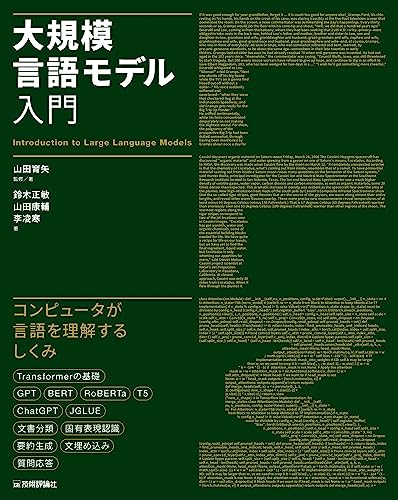
大規模言語モデル入門
¥3,520
What Are Multi-Agent Systems?
A multi-agent system is a computational framework consisting of multiple autonomous entities — called agents — that perceive their environment, make decisions, and act to achieve individual or shared goals. Each agent operates independently but can communicate, collaborate, or compete with other agents in the system.
Think of it like a well-run hospital: there are radiologists, surgeons, nurses, pharmacists, and administrators. Each has specialized expertise. They don't all do the same job, but they coordinate to deliver patient care. In MAS terminology:
- Agent: An autonomous entity (e.g., an LLM with tools, a robotic process automation bot, or a specialized ML model)
- Environment: The context the agents operate within (e.g., a codebase, a database, a user conversation)
- Interaction Protocol: The rules governing how agents communicate and hand off tasks
- Orchestrator: A coordinating agent or controller that manages the workflow between agents
Key Properties of Agents
| Property | Description |
|---|---|
| Autonomy | Agents act without direct human intervention |
| Reactivity | Agents respond to changes in their environment |
| Proactivity | Agents pursue goals, not just react |
| Social Ability | Agents communicate with other agents |
| Adaptability | Agents learn and adjust behavior over time |
Why Multi-Agent Systems Over Single-Agent Architectures?
Before diving into design, it's worth understanding why MAS matters. A single LLM or AI model — no matter how capable — suffers from several fundamental limitations:
- Context window limits: GPT-4 Turbo supports 128K tokens, but complex enterprise tasks require far more sustained memory
- Specialization gaps: One model rarely excels at coding, legal reasoning, and image analysis simultaneously
- Parallelism bottlenecks: A single agent processes tasks sequentially; agents in a network can work in parallel
- Fault tolerance: If one agent fails, others can compensate
Research from Stanford's AI Lab demonstrated that a multi-agent coding system outperformed a single GPT-4 instance by 32% on benchmark accuracy for complex software engineering tasks (SWE-bench, 2024).
Core Architectural Patterns for Multi-Agent Systems
1. Pipeline Architecture (Sequential)
In a pipeline, agents operate in a fixed sequence — like an assembly line. Agent A's output becomes Agent B's input.
Best for: Document processing, report generation, structured data transformation
[Researcher Agent] → [Summarizer Agent] → [Writer Agent] → [Editor Agent]
Drawback: A bottleneck at any stage stalls the entire pipeline.
2. Hierarchical Architecture (Orchestrator-Worker)
A master orchestrator agent breaks tasks into subtasks and delegates to specialized worker agents. Workers report back, and the orchestrator synthesizes results.
Best for: Complex reasoning tasks, software development, customer service automation
           [Orchestrator]
          /      |       \
   [Coder]  [Tester]  [Documenter]
This is the pattern used by Cognition AI's Devin, the first AI software engineer, which uses an orchestrator to coordinate planning, coding, debugging, and deployment agents.
3. Peer-to-Peer (Flat/Decentralized) Architecture
All agents are equals. They communicate directly with each other without a central coordinator. Decision-making is distributed.
Best for: Simulations, robotics swarms, decentralized problem-solving
Drawback: Harder to debug and coordinate; risk of conflicting agent goals.
4. Market-Based Architecture
Agents "bid" for tasks based on their capability and availability, similar to an economic marketplace. A broker allocates tasks to the best-fit agent.
Best for: Resource allocation, logistics, dynamic workload balancing
Key Components to Design Before Implementation
Agent Roles and Responsibilities
Before writing a single line of code, define what each agent does — and more importantly, what it doesn't do. Overlapping responsibilities are a leading cause of MAS failures.
A useful exercise is the RACI matrix (Responsible, Accountable, Consulted, Informed) applied to each agent type.
Communication Protocols
How do agents talk to each other? Options include:
- Message passing (event-driven queues like Kafka or RabbitMQ)
- Shared memory/blackboard (all agents read/write to a central data store)
- Direct API calls (synchronous REST or gRPC calls between agents)
- LLM-native tool calls (structured function calling via OpenAI, Anthropic, etc.)
For deep theoretical grounding on agent communication and coordination, the classic multi-agent systems textbook by Weiss remains one of the most comprehensive resources available.
Memory Management
Agents need memory to be effective. Design three memory layers:
| Memory Type | Scope | Example |
|---|---|---|
| In-context memory | Single conversation/task | Current task instructions |
| External short-term | Session-level | Redis cache of recent outputs |
| External long-term | Persistent knowledge | Vector database (Pinecone, Weaviate) |
Tool Integration
Each agent should have access to a curated toolset — not everything. Giving every agent every tool leads to confusion and hallucinated tool calls. Examples:
- Web Search Agent: Tavily API, SerpAPI
- Code Execution Agent: E2B sandbox, Docker containers
- Data Analysis Agent: Python REPL, SQL connectors
- Email/Comms Agent: Gmail API, Slack SDK
Top Frameworks for Building Multi-Agent Systems
Choosing the right framework is critical. Here's a side-by-side comparison of the most widely adopted tools in 2025:
| Framework | Language | Orchestration Style | LLM Agnostic | Best Use Case | Maturity |
|---|---|---|---|---|---|
| LangGraph | Python | Graph-based stateful | Yes | Complex workflows with cycles | High |
| AutoGen (Microsoft) | Python | Conversational MAS | Yes | Research & code generation | High |
| CrewAI | Python | Role-based hierarchical | Yes | Business task automation | Medium-High |
| AgentTorch | Python | Simulation-based | Partial | Large-scale agent simulations | Medium |
| Semantic Kernel | Python/C# | Plugin-based | Yes | Enterprise .NET integration | High |
| OpenAI Swarm | Python | Lightweight handoffs | No (OpenAI only) | Rapid prototyping | Low-Medium |
LangGraph stands out for production-grade deployments requiring stateful, cyclic workflows — especially where agents need to loop back and self-correct. CrewAI excels for business teams who want quick setup with role-defined agents.
Real-World Implementation Examples
Example 1: Cognition AI's Devin (Software Engineering Agent)
Devin uses a multi-agent architecture where a high-level planning agent breaks user requirements into subtasks. Specialized agents handle code writing, terminal execution, browser testing, and documentation. The system achieved 13.86% on the SWE-bench benchmark — a 32% improvement over the previous best single-model result at launch.
The key implementation insight: each agent has access only to the tools it needs. The code-writing agent can't browse the web. The browser agent can't modify files. This principle of least privilege dramatically reduces error propagation.
Example 2: JPMorgan Chase's DocLLM and Contract Analysis MAS
JPMorgan Chase deployed a multi-agent document processing system for legal contract analysis. One agent extracts clauses, another cross-references regulatory requirements, a third flags risks, and a final agent generates a summary report. The system processes contracts 10x faster than their previous single-model approach and reduced analyst review time by 60% according to their internal case study published at NeurIPS 2024.
Example 3: AutoGen in Enterprise Research at Microsoft
Microsoft's AutoGen framework powers internal research automation tools where a UserProxy agent represents the human, a AssistantAgent (powered by GPT-4) does the reasoning, and additional agents handle code execution and web lookup. Teams using this setup reported completing literature review tasks 5x faster than manual methods. The framework's conversational multi-agent model is now open-source and has over 30,000 GitHub stars.
Implementation Best Practices
Start Small, Then Scale
Don't build 15 agents on day one. Start with 2-3 agents solving a real problem. Validate communication patterns, then add complexity iteratively.
Design for Failure
Every agent should have:
- Timeout handling
- Retry logic with exponential backoff
- Fallback behavior (e.g., return partial results vs. crashing)

