
Open-Source LLMs: Llama, Mistral, and Falcon Compared
Published: April 26, 2026
Introduction
The landscape of large language models (LLMs) has undergone a seismic shift over the past two years. While proprietary giants like GPT-4 and Claude once dominated the conversation, a powerful wave of open-source alternatives has emerged—giving developers, researchers, and businesses unprecedented control over their AI infrastructure.
Three models have risen to the top of this open-source revolution: Meta's Llama, Mistral AI's Mistral, and Technology Innovation Institute's Falcon. Each brings a unique philosophy, architectural innovation, and licensing structure to the table.
Whether you're a solo developer building a personal assistant, a startup trying to avoid expensive API costs, or an enterprise looking to run AI entirely on-premise for data privacy reasons, understanding the differences between these models is critical to making the right choice.
Sponsored
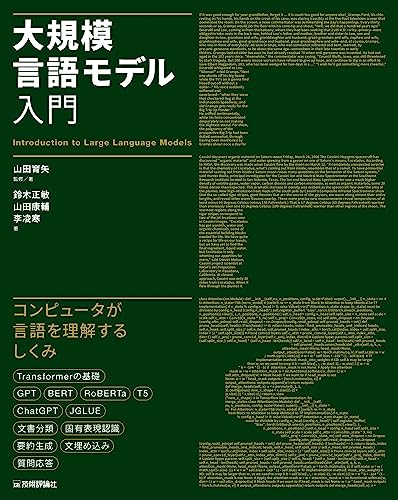
大規模言語モデル入門
¥3,520
In this comprehensive guide, we'll break down each model's strengths, weaknesses, performance benchmarks, and real-world applications—so you can make an informed decision without wading through dozens of research papers.
What Is an Open-Source LLM?
Before diving into comparisons, let's clarify the term. A Large Language Model (LLM) is a type of AI trained on vast amounts of text data to understand and generate human language. Think of it as a highly sophisticated autocomplete system that can reason, summarize, translate, and code.
Open-source LLMs are models whose weights (the internal parameters learned during training) are publicly released, allowing anyone to download, modify, fine-tune, and deploy them. This is fundamentally different from closed models like GPT-4, where you only access the model through an API without ever seeing the underlying code or weights.
The key benefits of open-source LLMs include:
- Cost control: No per-token API fees
- Privacy: Data never leaves your servers
- Customizability: Fine-tune the model on your own domain-specific data
- Transparency: Researchers can audit the model's behavior
For those wanting to deepen their understanding of how these models work at a fundamental level, a practical guide to deep learning and transformer architecture is an excellent resource to build the necessary theoretical foundation.
Meta's Llama: The Community Favorite
Background and Evolution
Meta (formerly Facebook) released the first Llama (Large Language Model Meta AI) model in February 2023, initially for research purposes. The release of Llama 2 in July 2023, however, was a watershed moment—it came with a permissive commercial license for most use cases, instantly becoming the backbone of thousands of open-source projects.
Llama 3, released in April 2024, pushed the envelope further. The flagship Llama 3 70B model achieved scores that rivaled GPT-3.5 on many benchmarks, while the Llama 3 8B model outperformed Llama 2's 70B predecessor—meaning a smaller, cheaper-to-run model now punched above its weight class.
Key Technical Specifications
- Model sizes: 8B, 70B, and 405B parameters (Llama 3)
- Context window: 8,192 tokens (Llama 3), with extended versions reaching 128K tokens
- Training data: Over 15 trillion tokens for Llama 3
- Architecture: Grouped Query Attention (GQA) for improved inference efficiency
Performance Highlights
Llama 3 70B scored 82.0 on the MMLU benchmark (Massive Multitask Language Understanding), which tests knowledge across 57 academic subjects. For context, GPT-3.5 scores around 70.0 on the same benchmark—a 17% improvement in this key metric.
On HumanEval (a coding benchmark), Llama 3 8B achieved 62.2%, a figure that was unimaginable for a model of that size just 18 months prior.
Licensing
Llama models are available under the Meta Llama Community License. This allows commercial use for most companies, but organizations with more than 700 million monthly active users must request a special license from Meta—a restriction primarily targeting tech giants.
Real-World Example: Perplexity AI
Perplexity AI, the AI-powered search engine valued at over $3 billion, uses Llama-based fine-tuned models as part of its infrastructure. By fine-tuning Llama on web search data and implementing retrieval-augmented generation (RAG), Perplexity delivers real-time, citation-backed answers—demonstrating Llama's adaptability for specialized, high-traffic applications.
Mistral AI: Efficiency as a Superpower
Background and Philosophy
Founded in 2023 by former DeepMind and Meta researchers, Mistral AI burst onto the scene with an audacious claim: their models could match or exceed much larger models by using smarter architecture rather than raw scale.
Their debut model, Mistral 7B, released in September 2023, backed up that claim spectacularly. It outperformed Llama 2 13B on most benchmarks despite being nearly half the size—a roughly 40% parameter reduction with equal or better performance.
Key Technical Innovations
Mistral's edge comes from two architectural innovations:
-
Sliding Window Attention (SWA): Instead of every token attending to every other token (which becomes computationally expensive), SWA allows each token to attend to a fixed-size window of neighboring tokens. This enables efficient processing of long documents.
-
Mixture of Experts (MoE): Mixtral 8x7B, Mistral's follow-up model, uses MoE architecture. Rather than activating all parameters for every input, MoE routes each token through only 2 of 8 "expert" sub-networks. The result? Mixtral 8x7B matches Llama 2 70B performance while being 6x faster at inference.
Performance Highlights
- Mistral 7B outperforms Llama 2 13B on all benchmarks tested
- Mixtral 8x7B achieves 70.6 on MMLU, comparable to GPT-3.5
- On the MT-Bench (which evaluates multi-turn conversation quality), Mixtral 8x7B scored 8.3 out of 10, versus Llama 2 70B's 6.27—a 32% improvement in conversational quality
Licensing
Mistral offers models under the Apache 2.0 license, which is one of the most permissive open-source licenses available. There are no restrictions on commercial use, modification, or redistribution—making it extremely attractive for businesses of all sizes.
Real-World Example: Harvey AI
Harvey AI, a legal AI platform backed by OpenAI and used by elite law firms like Allen & Overy, has explored Mistral-based fine-tuning for document analysis. The efficiency of Mistral's architecture allows Harvey to process lengthy legal documents (which can easily exceed 50,000 words) without the computational costs that would make the service prohibitively expensive for law firm clients.
Falcon: The Middle East's AI Moonshot
Background and Mission
Falcon is developed by the Technology Innovation Institute (TII), a research center based in Abu Dhabi, UAE. It was one of the first open-source models to seriously challenge the dominance of models from US and European labs.
Falcon 40B, released in May 2023, briefly held the top position on the Hugging Face Open LLM Leaderboard—a major achievement for a model outside the Silicon Valley ecosystem.
Key Technical Specifications
- Model sizes: 1B, 7B, 40B, and 180B parameters
- Architecture: Uses multi-query attention and a custom FlashAttention implementation for optimized throughput
- Training data: Trained on RefinedWeb, a massive 5 trillion token curated web dataset—one of the most carefully cleaned pre-training datasets in the open-source community
Performance Highlights
- Falcon 180B scored 68.74 on MMLU, competitive with Llama 2 70B at a larger scale
- Falcon 40B achieves approximately 55 tokens per second on an A100 GPU—respectable throughput for production deployments
- The RefinedWeb dataset used for training was specifically designed to reduce toxic content, resulting in safer out-of-the-box outputs compared to some competitors
Licensing
Falcon's licensing has evolved:
- Falcon 7B and 40B: Released under the Apache 2.0 license (fully open-source, commercial use allowed)
- Falcon 180B: Uses a custom license that requires attribution and restricts certain commercial uses for very large-scale deployments
Real-World Example: Zurich Insurance Group
Zurich Insurance Group has partnered with TII to explore Falcon's deployment for internal document processing and customer service automation. The insurance giant was attracted by Falcon's strong multilingual capabilities and the enterprise-grade support offered by TII—demonstrating that open-source models backed by well-funded research institutes can compete for serious enterprise contracts.
Head-to-Head Comparison Table
| Feature | Llama 3 (70B) | Mixtral 8x7B | Falcon 40B |
|---|---|---|---|
| Developer | Meta (USA) | Mistral AI (France) | TII (UAE) |
| Parameters | 70B | ~47B (active: ~13B) | 40B |
| MMLU Score | 82.0 | 70.6 | ~58.1 |
| License | Meta Community License | Apache 2.0 | Apache 2.0 |
| Commercial Use | Yes (with limits) | Fully open | Yes (7B/40B) |

