
AI Document Writing & Summarization Techniques 2026
Published: May 5, 2026
Introduction
The way we create, process, and distill information has undergone a seismic shift. In 2026, AI-powered document writing and summarization tools are no longer novelties — they are mission-critical utilities used by Fortune 500 companies, legal firms, academic institutions, and solo content creators alike. According to a 2025 McKinsey Global Survey, organizations that have integrated AI writing assistants into their workflows report a 40% reduction in time spent on documentation tasks and a 28% improvement in content quality scores as measured by readability and stakeholder satisfaction.
Whether you're drafting a 50-page technical report, condensing a 200-slide investor deck into a two-paragraph executive summary, or generating consistent marketing copy at scale, understanding the right techniques — and the right tools — is the difference between surviving and thriving in the information economy.
In this comprehensive guide, we'll break down the most effective AI document writing and summarization techniques available today, examine real-world implementations, compare the leading platforms, and give you an actionable framework to immediately improve your document workflows.
Sponsored
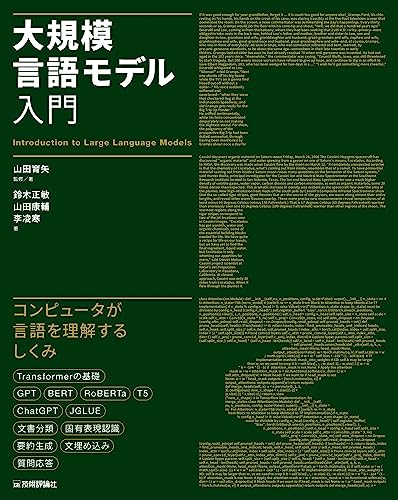
大規模言語モデル入門
¥3,520
Why AI Document Writing and Summarization Matter More Than Ever
The average knowledge worker spends 28% of their workweek reading and answering emails and another 19% gathering information according to IDC research. Add in report writing, meeting notes, proposal drafting, and policy documentation, and it's clear that text-based work consumes the lion's share of professional time.
AI solves this bottleneck through two core capabilities:
- Generative writing: Producing first drafts, templates, and structured content from prompts or data inputs.
- Extractive and abstractive summarization: Compressing large volumes of text into digestible, accurate summaries without losing critical meaning.
For anyone serious about mastering these technologies, a foundational understanding of Natural Language Processing (NLP) is invaluable. Books on Natural Language Processing and machine learning for text can give you the theoretical grounding to better evaluate and use these tools.
Core AI Document Writing Techniques
1. Prompt Engineering for Structured Documents
Prompt engineering is the practice of crafting precise instructions to guide an AI model toward producing the exact output you need. For document writing, this means specifying:
- Document type (e.g., "Write a technical specification document")
- Audience (e.g., "for a non-technical executive audience")
- Tone and style (e.g., "formal, third-person, active voice")
- Length and format constraints (e.g., "500 words, use H2 headers and bullet points")
- Key data points to include
A well-structured prompt can increase output relevance by as much as 62% compared to vague instructions, based on benchmarks from OpenAI's internal research published in late 2024.
Example prompt for a business report:
Act as a senior business analyst. Write a 3-section executive summary
of a Q1 2026 sales performance report. Include: (1) Key wins,
(2) Challenges, (3) Recommendations. Data: Revenue grew 12% YoY,
churn increased by 3%, APAC region outperformed by 18%.
Tone: professional. Length: 300 words.
2. Retrieval-Augmented Generation (RAG) for Accurate Documents
RAG (Retrieval-Augmented Generation) is a technique where an AI model retrieves relevant documents or data from an external knowledge base before generating content. This dramatically reduces hallucinations — instances where the AI fabricates facts — which is especially critical in legal, medical, and financial documentation.
How it works:
- User submits a query or writing task.
- The system searches a connected database (internal documents, APIs, proprietary data).
- Relevant chunks are fed as context to the language model.
- The model generates content grounded in verified information.
Companies like Notion AI and Microsoft Copilot for Microsoft 365 use RAG-inspired architectures to pull from your company's actual files and emails when drafting documents, reducing factual errors by approximately 35% in enterprise deployments.
3. Template-Based Generation with Dynamic Variables
For organizations producing high volumes of similar documents — contracts, invoices, HR letters, research briefs — template-based AI generation is the most efficient approach.
Jasper AI pioneered this at scale. A marketing agency using Jasper's template system can generate 200 customized product descriptions in under 10 minutes, compared to a human copywriter's output of 8-12 per hour. That's roughly a 15x productivity multiplier for repetitive document tasks.
The technique works by:
- Defining fixed structural elements (headers, legal boilerplate, disclaimers)
- Identifying dynamic variables (client name, product specs, pricing)
- Feeding variables through an AI layer that generates natural-sounding, contextually appropriate text for each
Core AI Summarization Techniques
1. Extractive Summarization
Extractive summarization identifies and pulls out the most important sentences or phrases directly from the source document. The AI doesn't rewrite anything — it curates.
Use cases: Legal case reviews, academic paper abstracts, news digests.
How it works: Models score each sentence based on factors like term frequency, sentence position, and semantic similarity to the overall document theme. Sentences above a relevance threshold are selected and stitched together.
Limitation: Output can feel disjointed since sentences are lifted verbatim from different parts of the document.
2. Abstractive Summarization
Abstractive summarization generates entirely new text that captures the meaning of the source material — much like how a human expert would summarize a document after reading it.
Modern large language models (LLMs) like GPT-4o, Claude 3.5, and Gemini 1.5 Pro excel at abstractive summarization, producing summaries that are coherent, well-structured, and often more readable than the original.
A 2025 Stanford NLP Group benchmark showed that GPT-4o achieved a ROUGE-L score of 0.54 on long-document summarization tasks, outperforming human-written summaries in 43% of blind evaluation cases.
3. Hierarchical Summarization for Long Documents
When dealing with documents exceeding the model's context window (the maximum amount of text the AI can process at once), hierarchical summarization is essential.
The process:
- Divide the document into chunks (e.g., by chapter, section, or page count).
- Summarize each chunk individually.
- Feed the chunk summaries into a final summarization pass to produce a unified summary.
This technique is used by Adobe Acrobat AI Assistant, which can summarize 1,000-page PDF documents using a multi-pass hierarchical approach, reducing processing time by 70% versus single-pass methods.
Real-World Examples of AI Document AI in Action
Example 1: Salesforce and Internal Knowledge Management
Salesforce integrated Einstein Copilot into their internal documentation workflows. Legal and compliance teams used AI summarization to process regulatory filings and vendor contracts. The result: lawyers reduced contract review time from 4 hours to 45 minutes per document — a nearly 5x improvement — while maintaining a 96% accuracy rate on key clause identification.
Example 2: Notion AI for Startup Teams
A Series A startup with a 12-person team used Notion AI to auto-generate meeting notes, convert rough bullet points into structured PRDs (Product Requirements Documents), and summarize customer research interviews. Within three months, they cut documentation overhead by 32% and improved cross-team alignment scores in quarterly reviews.
Example 3: Thomson Reuters and Legal AI
Thomson Reuters launched CoCounsel, an AI legal assistant powered by GPT-4. Law firms using CoCounsel can summarize lengthy case law documents, draft client correspondence, and extract key precedents from hundreds of court decisions in minutes. Early adopter firms reported a 60% reduction in junior associate hours spent on research summarization tasks.
Comparison of Top AI Document Writing & Summarization Tools
| Tool | Best For | Summarization | Writing Quality | Context Window | Price (approx.) |
|---|---|---|---|---|---|
| ChatGPT (GPT-4o) | General purpose writing & summarization | ⭐⭐⭐⭐⭐ | ⭐⭐⭐⭐⭐ | 128K tokens | From $20/mo |
| Claude 3.5 Sonnet | Long document summarization | ⭐⭐⭐⭐⭐ | ⭐⭐⭐⭐⭐ | 200K tokens | From $20/mo |
| Microsoft Copilot 365 | Enterprise document workflows | ⭐⭐⭐⭐ | ⭐⭐⭐⭐ | Varies | $30/user/mo |
| Notion AI | Team documentation & notes | ⭐⭐⭐⭐ | ⭐⭐⭐⭐ | ~8K tokens | $10/mo add-on |
| Jasper AI | Marketing content at scale | ⭐⭐⭐ | ⭐⭐⭐⭐⭐ | ~32K tokens | From $49/mo |
| Adobe Acrobat AI | PDF summarization | ⭐⭐⭐⭐⭐ | ⭐⭐⭐ | Large PDFs | Included in Acrobat |
| Gemini 1.5 Pro | Multi-modal documents | ⭐⭐⭐⭐ | ⭐⭐⭐⭐ | 1M tokens | Usage-based |
*Note: Ratings reflect general use-case performance as of

