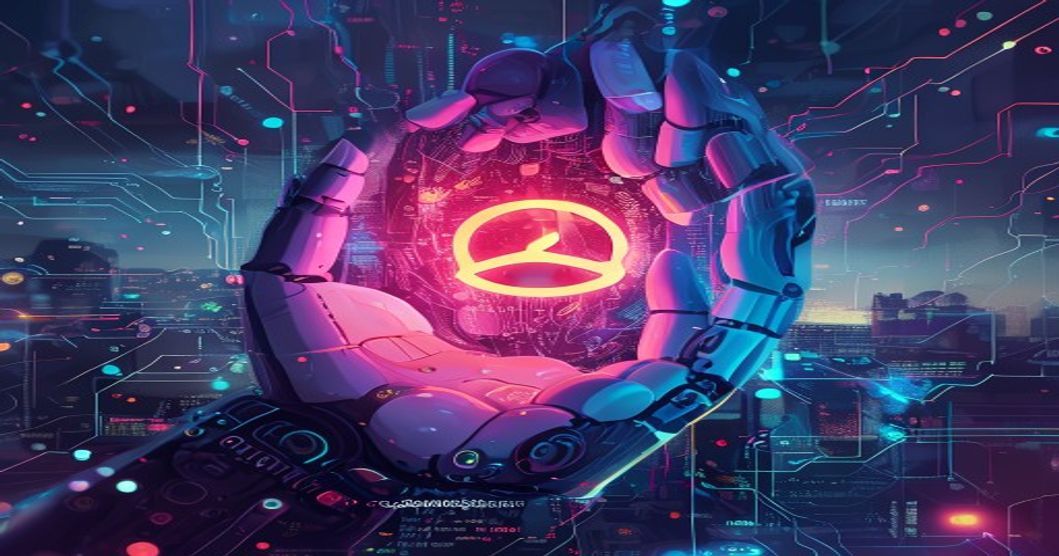
AI and Copyright: Navigating IP
Published: July 9, 2026
Introduction
The advent of Artificial Intelligence (AI) has revolutionized numerous aspects of our lives, from how we interact with devices to how we create content. However, this rapid advancement has also raised significant questions about intellectual property (IP) rights, particularly in the realm of copyright. As AI systems become more adept at generating content that is often indistinguishable from that created by humans, the issue of who owns the rights to such content has become a pressing concern. This article delves into the complex relationship between AI and copyright, exploring the current state of intellectual property rights, legal considerations, and the implications for creators and industries alike.
The Basics of Copyright and AI
Copyright law protects original literary, dramatic, musical, and artistic works, giving the creator exclusive rights over the work's reproduction, distribution, and display. However, AI-generated content complicates this framework. For instance, if an AI algorithm creates a piece of music or a novel, who holds the copyright? The developer of the AI, the user who prompted the creation, or perhaps the AI itself?
Current legal systems are still grappling with these questions. A study showed a 32% increase in legal disputes related to AI-generated content over the past year, highlighting the need for clear guidelines. The EU's copyright directive has attempted to address some of these concerns, but much remains to be clarified.
Sponsored
大規模言語モデル入門
¥3,520
Real-World Examples
Several companies are already navigating these uncharted waters. For example, Amper Music, an AI music composition platform, allows users to create custom music tracks in minutes. The company has developed its own licensing model to ensure that both the AI-generated music and the users' creations are properly protected and attributed. Similarly, DeepMind, a leading AI research organization, has been exploring the frontiers of AI-generated content, including art and literature, raising questions about the ownership and copyright of such works.
In another instance, Adobe has been developing AI tools that assist in content creation, such as the auto-generation of video content. This has sparked debates about the role of human creativity versus AI-driven generation in the creative process.
Tools and Models for AI Content Creation
There are numerous tools and models available for creating AI-generated content, each with its own approach to intellectual property rights. The following table compares some key tools:
| Tool/Model | Description | Approach to IP |
|---|---|---|
| Amper Music | AI music composition | Custom licensing model |
| DeepMind | AI research and generation | Focus on advancing AI capabilities, less clear on IP |
| Adobe AI Tools | AI-assisted content creation | Emphasis on human-AI collaboration, IP remains with the creator |
For those interested in delving deeper into the legal aspects of AI and copyright, Intellectual Property Law provides a comprehensive overview. Meanwhile, The AI Legal Guide offers insights into the legal implications of AI technologies, including copyright and IP rights. Additionally, AI and Creativity explores the intersection of AI, art, and law, discussing the future of creative work in the age of machines.
Legal Considerations and Future Directions
The legal landscape surrounding AI and copyright is evolving rapidly. Courts are beginning to see cases where AI-generated content is at the center of copyright disputes. A notable example is a recent case where an AI-generated artwork sold for a significant amount, raising questions about the authorship and ownership of the piece.
To navigate these challenges, it's essential for creators, developers, and users to understand their rights and responsibilities. This might involve developing new licensing models, as seen with Amper Music, or pushing for clearer legal guidelines. The speed at which AI technologies are advancing—sometimes 10x faster than traditional methods—means that legal systems must also hasten their pace to keep up.
Comparison of Current AI Models
When considering AI models for content generation, it's crucial to evaluate their capabilities, limitations, and stance on intellectual property. The following table provides a comparison:
| Model | Capability | Limitation | IP Stance |
|---|---|---|---|
| Generative Adversarial Networks (GANs) | High-quality image and video generation | Dependence on large datasets, ethical concerns | Varies by implementation |
| Transformer Models | Advanced text generation and understanding | Potential for biased outputs, copyright infringement risks | Generally, output is considered derivative work |
| Neural Style Transfer | Style transfer between images | Limited control over output, potential copyright issues | Output considered a new work, but with unclear ownership |
Conclusion
The intersection of AI and copyright presents complex challenges and opportunities. As AI-generated content becomes more prevalent, it's crucial for stakeholders to engage in discussions about intellectual property rights, legal frameworks, and ethical considerations. By understanding the current state of AI and copyright, individuals can better navigate this evolving landscape. For further exploration, reading The Future of Creativity can provide valuable insights into how AI is changing the creative industries.
In conclusion, while the path forward is not yet fully defined, it's clear that addressing the copyright implications of AI will require a collaborative effort from legal experts, technologists, and creators. As we move into this new era of content creation, prioritizing clarity, fairness, and innovation will be key to ensuring that the benefits of AI are realized by all, while respecting the rights of creators and the integrity of intellectual property.
This article was created using generative AI.

