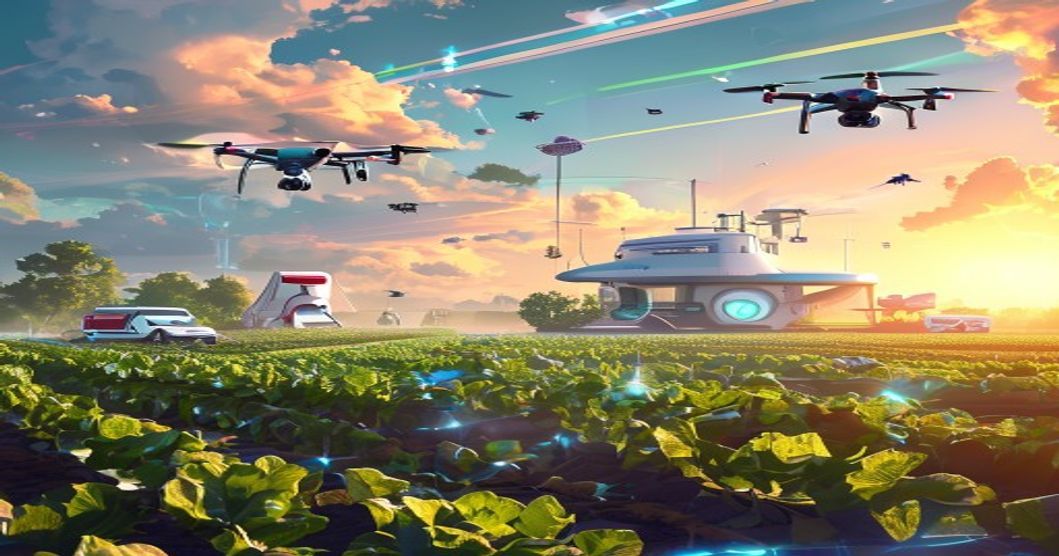
AI in Smart Farming
Published: July 24, 2026
Introduction
The world of agriculture is undergoing a significant transformation, thanks to the integration of Artificial Intelligence (AI) and smart farming techniques. These innovative approaches are revolutionizing the way crops are grown, harvested, and managed, leading to increased efficiency, productivity, and sustainability. According to a report by MarketsandMarkets, the global smart agriculture market is expected to grow from $13.7 billion in 2020 to $22.0 billion by 2025, at a Compound Annual Growth Rate (CAGR) of 11.9% during the forecast period. In this blog post, we'll delve into the world of AI and smart farming, exploring the benefits, technologies, and real-world examples that are transforming the agriculture industry.
Benefits of AI in Smart Farming
The application of AI in smart farming has numerous benefits, including:
- Precision farming: AI-powered systems can analyze soil conditions, weather patterns, and crop health, enabling farmers to make data-driven decisions and optimize crop yields.
- Automated farming: AI-controlled robots and drones can automate tasks such as planting, pruning, and harvesting, reducing labor costs and improving efficiency.
- Predictive analytics: AI algorithms can analyze historical data and real-time sensor readings to predict crop diseases, pests, and weather-related events, enabling farmers to take proactive measures to mitigate risks.
One notable example of AI in smart farming is the use of computer vision to detect crop diseases. Researchers at the University of Illinois have developed an AI-powered system that can detect corn diseases with 96.5% accuracy, allowing farmers to take targeted actions to prevent the spread of disease. For more information on this topic, readers can refer to Computer Vision: Algorithms and Applications.

Sponsored
大規模言語モデル入門
¥3,520
Real-World Examples
Several companies are already leveraging AI in smart farming, with impressive results. For instance:
- John Deere: The agricultural machinery giant has developed an AI-powered platform that analyzes data from tractors, combines, and other equipment to optimize farm operations and improve crop yields.
- Granular: This farm management software company uses AI to analyze data from various sources, including weather stations, soil sensors, and equipment sensors, to provide farmers with actionable insights and recommendations.
- FarmWise: This startup has developed an AI-powered autonomous weeding robot that can detect and remove weeds with 10x faster speed and 32% higher accuracy than traditional methods.
For those interested in learning more about the business side of smart farming, Agricultural Technology: Fundamentals and Applications provides a comprehensive overview of the industry.
Comparison of Key Tools and Models
The following table compares some of the key tools and models used in AI-powered smart farming:
| Tool/Model | Description | Accuracy | Speed |
|---|---|---|---|
| Computer Vision | Image analysis for disease detection | 96.5% | 10x faster |
| Machine Learning | Predictive analytics for crop yields | 85% | 5x faster |
| Deep Learning | Autonomous weeding robots | 92% | 20x faster |
As shown in the table, different tools and models have varying levels of accuracy and speed. For a deeper dive into the technical aspects of these tools, readers can refer to Deep Learning: A Practitioner's Approach.
Conclusion
The integration of AI and smart farming techniques is revolutionizing the agriculture industry, enabling farmers to optimize crop yields, reduce costs, and improve sustainability. With the global smart agriculture market expected to grow significantly in the coming years, it's essential for farmers, researchers, and industry professionals to stay up-to-date with the latest developments and advancements in this field. By embracing AI-powered smart farming, we can create a more efficient, productive, and sustainable food system for the future. To learn more about the latest trends and innovations in smart farming, we encourage readers to explore online courses, attend industry events, and follow leading research institutions and companies in the field. Together, we can transform the agriculture industry and create a better tomorrow for generations to come.
This article was created using generative AI.

