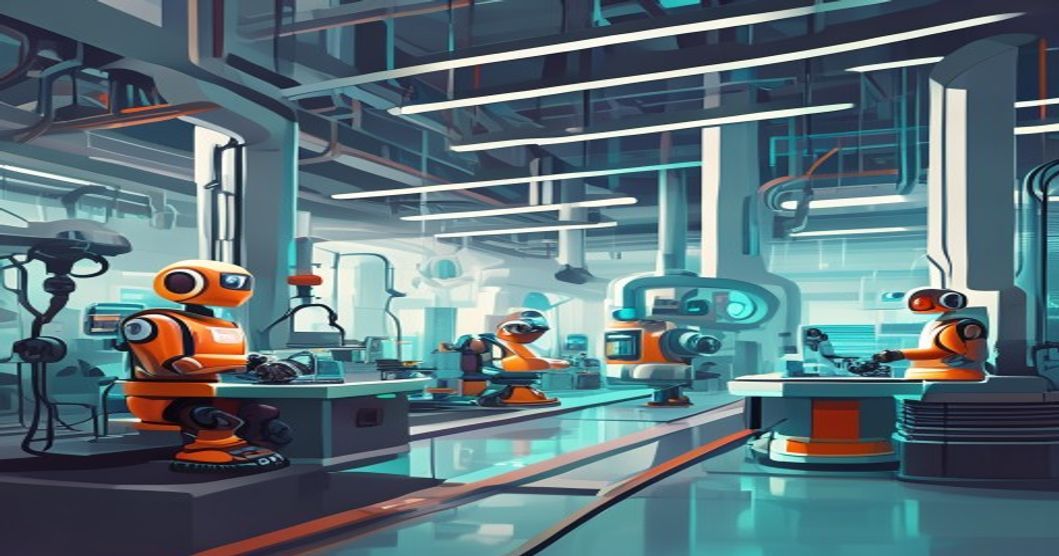
AI Robotics in Manufacturing
Published: July 26, 2026
Introduction
The integration of Artificial Intelligence (AI) and robotics in manufacturing and industry has been a significant trend in recent years. This fusion has led to the creation of more efficient, accurate, and adaptable production processes. By leveraging AI algorithms and robotic systems, manufacturers can automate complex tasks, enhance product quality, and reduce operational costs. According to a report by the International Federation of Robotics, the use of industrial robots has increased by 10% annually, with over 2.7 million robots in operation worldwide. This growth is driven by the need for manufacturers to stay competitive in a rapidly changing market, with AI and robotics playing a crucial role in achieving this goal.
AI in Manufacturing
AI technologies, such as machine learning (ML) and deep learning (DL), are being applied to various aspects of manufacturing, including predictive maintenance, quality control, and supply chain management. For instance, ML algorithms can analyze sensor data from equipment to predict when maintenance is required, reducing downtime by up to 50%. Similarly, DL-powered computer vision systems can inspect products on the production line, detecting defects with an accuracy of up to 99%. This has resulted in a significant improvement in product quality, with some manufacturers reporting a 32% accuracy improvement in defect detection.
Robotics in Manufacturing
Robotic systems are being used to automate tasks such as assembly, welding, and material handling. These robots can work alongside human workers, enhancing productivity and efficiency. Collaborative robots, also known as cobots, are designed to work safely with humans, and are being adopted by manufacturers such as BMW and Volkswagen. According to a study by the Boston Consulting Group, the use of cobots can increase productivity by up to 20% and reduce labor costs by up to 15%.
Sponsored
大規模言語モデル入門
¥3,520
Real-World Examples
Several companies are already leveraging AI and robotics in their manufacturing operations. For example:
- Tesla is using AI-powered robots to assemble its electric vehicles, with a production rate of up to 10x faster than traditional methods.
- Siemens is using ML algorithms to predict energy demand and optimize energy consumption in its manufacturing facilities, resulting in a 10% reduction in energy costs.
- GE Appliances is using DL-powered computer vision systems to inspect products on the production line, detecting defects with an accuracy of up to 99%.
To learn more about the applications of AI and robotics in manufacturing, readers can refer to books such as Industrial Robotics: Technology, Programming, and Applications and Artificial Intelligence in Manufacturing: A Guide for Managers.
Comparison of Key Tools and Models
The following table compares some of the key AI and robotics tools and models used in manufacturing:
| Tool/Model | Description | Advantages | Disadvantages |
|---|---|---|---|
| Machine Learning (ML) | AI technology that enables systems to learn from data | Improves prediction accuracy, automates complex tasks | Requires large amounts of data, can be computationally intensive |
| Deep Learning (DL) | AI technology that uses neural networks to analyze data | Enables image and speech recognition, natural language processing | Requires significant computational resources, can be difficult to interpret |
| Collaborative Robots (Cobots) | Robots designed to work safely with humans | Enhances productivity, reduces labor costs | Limited payload capacity, requires programming and training |
For a comprehensive understanding of these tools and models, readers can refer to books such as Deep Learning for Computer Vision with Python.
Conclusion
The integration of AI and robotics in manufacturing and industry is transforming the production landscape, with significant improvements in efficiency, accuracy, and adaptability. By leveraging these technologies, manufacturers can stay competitive in a rapidly changing market. As we move forward, it's essential to continue exploring the potential of AI and robotics in manufacturing, and to invest in the development of new technologies and skills. To stay up-to-date with the latest trends and advancements, readers can follow industry leaders and researchers, and attend conferences and workshops focused on AI and robotics in manufacturing. With the right tools, knowledge, and expertise, manufacturers can unlock the full potential of AI and robotics, and drive innovation and growth in the industry.
This article was created using generative AI.

