
Designing and Implementing Multi‑Agent Systems: A Complete Guide for 2024
Published: October 29, 2026
Introduction
The rise of large language models (LLMs) and autonomous AI tools has sparked a new wave of multi‑agent systems (MAS)—collections of specialized agents that perceive, reason, and act both independently and cooperatively. From intelligent digital assistants that schedule meetings to autonomous fleets managing warehouse logistics, MAS are becoming the backbone of complex, scalable AI solutions.
In this post we will:
- Break down the core design principles behind robust multi‑agent architectures.
- Walk through a step‑by‑step implementation roadmap, from problem definition to production deployment.
- Highlight real‑world deployments at Google Cloud, IBM, and Cognizant that illustrate how enterprises turn research prototypes into reliable services.
- Compare the leading platforms, frameworks, and toolchains that power today’s MAS.
- Provide actionable tips, pitfalls to avoid, and further reading (including curated Amazon book links).
Whether you’re an AI researcher, a software architect, or a product manager, this guide will give you a concrete playbook for turning the promise of multi‑agent collaboration into a production‑ready reality.
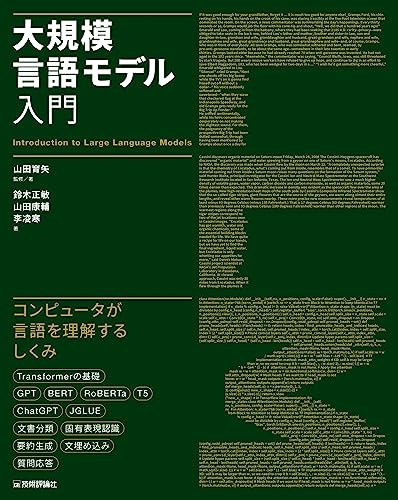
Sponsored
大規模言語モデル入門
¥3,520
1. What Is a Multi‑Agent System?
A multi‑agent system is a network of autonomous agents—software entities that can sense their environment, make decisions, and interact with each other—to solve problems that are difficult or impossible for a single monolithic model. Key characteristics include:
| Characteristic | Description |
|---|---|
| Autonomy | Each agent has its own goals and can operate without constant central control. |
| Social Ability | Agents communicate via messages, APIs, or shared data stores. |
| Reactivity | Agents perceive changes in the environment and respond in real time. |
| Pro‑activeness | Agents can take initiative to achieve long‑term objectives. |
Cognizant describes MAS as “a collection of autonomous agents that perceive their environment, make decisions, and interact with one another” and notes benefits such as scalability, resilience, and deeper system‑level problem solving【5†L1-L4】.
2. Core Design Principles
Designing a MAS is more than wiring together a few bots. Successful systems follow proven architectural patterns that address coordination, data consistency, and fault tolerance.
2.1 Define Clear Agent Roles
Start by segmenting the problem space into distinct responsibilities. For example:
| Agent Type | Typical Responsibility | Example |
|---|---|---|
| Perception Agent | Gather data from sensors, APIs, or user input. | A web‑scraper that pulls market prices. |
| Decision Agent | Run inference, optimization, or planning algorithms. | An LLM that selects the best product recommendation. |
| Execution Agent | Perform actions in external systems (e.g., send emails, trigger jobs). | A workflow orchestrator that creates a purchase order. |
| Coordination Agent | Mediate conflicts, negotiate resources, or aggregate results. | A scheduler that balances compute workloads across GPUs. |
2.2 Choose the Right Communication Model
- Message‑Based (Pub/Sub) – Scalable, loosely coupled; ideal for cloud‑native environments.
- Shared‑State (Database / KV Store) – Simpler for tightly integrated agents but requires careful concurrency control.
- Direct API Calls – Low latency, useful when agents are co‑located.
Truefoundry points out that production MAS often need centralized state management and identity‑aware execution to avoid “debugging issues that span multiple agents”【2†L3-L6】.
2.3 Embrace Modularity and Plug‑ability
Design agents as micro‑services or containerized functions so they can be upgraded, swapped, or scaled independently. This aligns with modern DevOps pipelines and simplifies testing.
2.4 Plan for Fault Tolerance
- Circuit breakers around external calls.
- Heartbeat monitoring for each agent.
- Graceful degradation – fallback agents that provide reduced functionality when the primary fails.
IBM highlights that “agent malfunctions” can cascade into system‑wide failures, especially when agents share underlying foundation models【3†L1-L4】. Robust error handling is therefore non‑negotiable.
2.5 Security and Credential Management
When agents interact with external tools (payment APIs, databases, etc.), they must handle least‑privilege credentials and rotate secrets automatically. Truefoundry notes that “managing credentials for agents connecting to many tools” is a common production challenge【2†L3-L5】.
3. Step‑by‑Step Implementation Roadmap
Google Cloud’s implementation checklist provides an excellent high‑level flow that we’ll expand with practical details.
3.1 Define the Problem and Goals
- Business objective: e.g., “automate end‑to‑end travel booking for corporate users.”
- Success metrics: latency < 2 s per request, 99.9 % availability, 15 % cost reduction.
- Agent‑level goals: perception agents must fetch flight data within 500 ms; decision agents must generate itineraries with > 90 % relevance.
3.2 Choose Agent Design and Architecture
- Select communication style (e.g., Pub/Sub via Google Pub/Sub).
- Sketch interaction diagram – who talks to whom, what data is shared.
- Identify external tools – APIs, databases, code execution, workflow systems (see System Design Handbook’s table of tool types)【4†L1-L4】.
3.3 Prototype in a Sandbox
- Use Jupyter notebooks or Docker Compose to spin up a minimal MAS.
- Validate end‑to‑end flow with synthetic data.
- Instrument logs and metrics from day one.
3.4 Implement Core Agents
| Agent | Tech Stack | Key Functions |
|---|---|---|
| Perception | Python + Requests + Cloud Functions | Pull flight prices from Amadeus API |
| Decision | LangChain + GPT‑4 | Generate itinerary options |
| Execution | Node.js + Google Cloud Tasks | Book tickets via airline partner API |
| Coordination | Go + NATS Streaming | Resolve double‑booking conflicts |
3.5 Integrate State Management
- Centralized store: Cloud Firestore or Redis for shared context.
- Versioning: Keep a history of decisions to support audits.
3.6 Test, Validate, and Iterate
- Unit tests for each agent’s business logic.
- Contract tests for inter‑agent APIs.
- Chaos experiments (e.g., kill an agent) to verify fault recovery.
3.7 Deploy to Production
- Infrastructure as Code (IaC): Terraform modules for Pub/Sub topics, Cloud Run services, IAM roles.
- Observability stack: OpenTelemetry for tracing, Prometheus for metrics, Loki for logs.
- CI/CD pipelines: Automated canary releases with rollback.
4. Real‑World Case Studies
4.1 Google Cloud’s “AI‑Powered Travel Assistant”
Google Cloud built a MAS that automates travel planning for enterprise customers. The system consists of:
- Perception agents that scrape flight, hotel, and car‑rental APIs.
- Decision agents powered by Gemini‑based LLMs that rank options based on policy compliance and user preferences.
- Execution agents that trigger bookings through partner APIs, while a coordination agent reconciles overlapping reservations.
The architecture follows Google’s step‑by‑step guide for MAS implementation【1†L1-L4】 and demonstrates how a large cloud provider scales agent fleets across multiple regions.
4.2 IBM Watson Orchestrate
IBM’s Watson Orchestrate leverages a MAS to automate repetitive business tasks such as expense reporting and meeting scheduling. Each “skill” is an autonomous agent that:
- Perceives user intent via natural language input.
- Decides the optimal workflow using a rule‑based engine combined with LLM suggestions.
- Executes actions across Office 365, SAP, and ServiceNow.
IBM emphasizes the need to guard against “agent malfunctions” that could cause system‑wide failures, prompting a heavy investment in monitoring and sandboxed testing【3†L1-L4】.
4.3 Cognizant’s Intelligent Supply‑Chain Platform
Cognizant’s AI Lab built a multi‑agent platform to optimize warehouse operations. The MAS includes:
| Agent | Role | Tools |
|---|---|---|
| Inventory Agent | Monitors stock levels in real time | IoT sensors + Azure IoT Hub |
| Demand Forecast Agent | Generates demand predictions using Prophet | Python + Azure ML |
| Routing Agent | Allocates pick‑paths to robots | ROS + OpenAI GPT‑4 |
| Coordination Agent | Balances robot workload and resolves conflicts | Kafka Streams |
The platform showcases the scalability and resilience advantages highlighted by Cognizant【5†L1-L4】.
5. Comparison of Leading MAS Platforms & Services
Below is a concise side‑by‑side look at the most popular frameworks and cloud services that developers can use today.
| Platform / Service | Core Offering | Communication Model | Built‑in State Mgmt | Security Features | Typical Use‑Case |
|---|---|---|---|---|---|
| Google Cloud Multi‑Agent Toolkit | Managed Pub/Sub, Cloud Functions, Vertex AI | Pub/Sub + HTTP | Firestore (optional) | IAM per service, Secret Manager | Enterprise assistants, data pipelines |
| IBM Watson Orchestrate | Skill‑based agents, pre‑trained LLMs | API calls + workflow engine | Watson Knowledge Catalog | Data encryption, role‑based access | Business process automation |
| Truefoundry Agent Framework | Containerized agents, observability suite | NATS, gRPC | Centralized Redis store | Identity‑aware execution, secret rotation | Production‑grade AI Ops |
| LangChain + OpenAI | Library for LLM‑driven agents | HTTP / LangChain “Chains” | Custom DB (e.g., Pinecone) | API key management via Azure Key Vault | Prototyping, research |
| Microsoft Azure Agent‑Based AI | Azure Functions, Azure Service Bus, Azure AI | Service Bus, Event Grid | Cosmos DB | Managed identities, Key Vault | Enterprise integration |
Tip: If you’re starting with a prototype, LangChain offers the fastest path to a working agent. For enterprise‑grade reliability, consider Google Cloud or Truefoundry, which already embed state management and identity‑aware execution.
6. Tools, Libraries, and Books to Deepen Your Knowledge
Below are three highly‑rated books that cover MAS theory, practical implementation, and emerging trends. Click the links to explore them on Amazon Japan (affiliate tag included).
- Multi‑Agent Systems: Algorithmic, Game‑Theoretic, and Logical Foundations – A comprehensive textbook that blends formal theory with real‑world case studies.
- Designing Intelligent Agents: A Guide to Multi‑Agent Systems – Focuses on architecture patterns, communication protocols, and scalability considerations.
- Practical AI Orchestration with LangChain – A hands‑on guide for building LLM‑driven agents and chaining them together in production.
7. Common Pitfalls & How to Avoid Them
| Pitfall | Symptoms | Mitigation |
|---|---|---|
| Tight coupling between agents | Small change breaks many agents. | Enforce API contracts, use versioned interfaces. |
| Shared credential leakage | Unauthorized API calls, audit failures. | Centralized secret manager, rotate keys automatically. |
| State inconsistency | Agents see stale data, leading to duplicate actions. | Adopt transactional stores or event sourcing. |
| Unobservable failures | Errors appear only in downstream logs. | End‑to‑end tracing (OpenTelemetry) and health checks. |
| Scalability bottlenecks | One agent becomes a throughput choke point. | Horizontal scaling, load‑balancing, and sharding. |
IBM’s warning about system‑wide failures caused by shared foundation models underscores the importance of isolating failure domains and implementing robust fallback mechanisms【3†L1-L4】.
8. Future Trends in Multi‑Agent Systems
- Foundation‑Model‑Powered Agents – As LLMs become more capable, agents will increasingly rely on a single shared model with specialized prompts, raising new security and governance challenges.
- Self‑Organizing Swarms – Research into emergent behavior will enable agents to dynamically form coalitions for ad‑hoc tasks, reducing the need for pre‑defined coordination logic.
- Edge‑Native MAS – Lightweight agents running on IoT devices will bring real‑time decision making to the network edge, demanding ultra‑low latency communication protocols.
- Standardized Agent Protocols – Initiatives like the OpenAI Agents API and MAS‑Spec aim to create interoperable interfaces, simplifying integration across vendors.
Staying abreast of these developments will help you future‑proof your designs.
9. Checklist for Production‑Ready Multi‑Agent Systems
- Problem definition with clear success metrics.
- Agent role matrix that isolates responsibilities.
- Communication strategy (Pub/Sub vs. direct API).
- Centralized state store with versioning.
- Security plan (IAM, secret rotation, least‑privilege).
- Observability stack (traces, metrics, logs).
- Automated testing (unit, contract, chaos).
- CI/CD pipeline with canary releases.
- Documentation of agent contracts and failure handling.
- Continuous monitoring for drift, performance, and cost.
If you tick all the boxes, you’re well on your way to a resilient, scalable MAS that can evolve alongside your business needs.
Conclusion
Multi‑agent systems are no longer a niche research topic; they are the architectural foundation for today’s most sophisticated AI products. By following a disciplined design process—defining clear roles, choosing the right communication model, managing state centrally, and hardening security—you can move from a sandbox prototype to a production‑grade solution that scales to millions of requests.
Real‑world deployments at Google Cloud, IBM, and Cognizant show that the principles outlined above translate into tangible business value: faster time‑to‑market, lower operational costs, and robust user experiences.
Ready to start building your own MAS? Begin with a small pilot, adopt the checklist, and iterate toward a fully orchestrated, fault‑tolerant agent ecosystem. And don’t forget to deepen your expertise with the recommended books—knowledge is the best catalyst for innovative agent design.
Take action now: define your first agent role, spin up a Pub/Sub topic, and watch your system come alive. The future of collaborative AI is waiting. Happy building!
Related Articles
- How AI Is Transforming Financial Services: The FinTech × AI Revolution
- AI Transforming Financial Services: The FinTech × AI Revolution
- Text-to-3D Model Generation: Current State and Future
This article was created using generative AI.

