
Programming Skills That Matter in the AI Era – Stay Ahead of the Curve
Published: November 1, 2026
Introduction
Artificial intelligence is no longer a niche research topic; it’s the engine powering everything from recommendation engines at Netflix to autonomous driving at Tesla. As AI models become larger, more capable, and increasingly integrated into everyday software, the programming skill set that lands a job—or keeps a career thriving—has shifted dramatically.
In this post we’ll break down the programming skills that truly matter in the AI era, explain why they matter, and show you how to acquire them. We’ll weave in concrete examples from leading tech companies, a side‑by‑side comparison of the most popular AI‑development stacks, and even a few curated Amazon book links to accelerate your learning journey.
Quick takeaway: Mastering Python, prompt & context engineering, cloud‑native AI, and systems‑level thinking will future‑proof your developer toolkit.
Sponsored
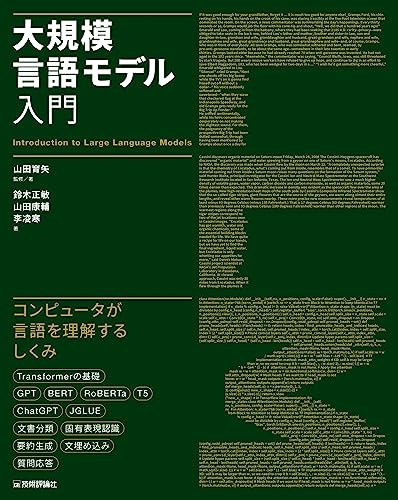
大規模言語モデル入門
¥3,520
1. Core Language Mastery: Python Remains King
Why Python Still Leads
Python’s simplicity, extensive ecosystem, and strong community make it the de‑facto language for AI research and production. Libraries such as NumPy, pandas, TensorFlow, and PyTorch let you move from data wrangling to model deployment in a handful of lines of code. As Skillsoft notes, “Programming is the backbone of AI development … Python is particularly popular due to its simplicity and the vast array of libraries”【3†https://www.skillsoft.com/blog/essential-ai-skills-everyone-should-have】.
Real‑World Example: OpenAI Codex
OpenAI’s Codex, the engine behind GitHub Copilot, is built almost entirely in Python. It parses natural‑language prompts, generates syntactically correct code, and continuously learns from billions of public repositories. Developers who can read and extend Codex‑style Python code are already in high demand.
Actionable Tip
- Daily practice: Build a mini‑project that pulls data from an API, cleans it with pandas, and trains a simple model in PyTorch.
- Book recommendation: Learn the fundamentals with Python Machine Learning – a hands‑on guide that walks through real AI pipelines. Grab it on Amazon: Python Machine Learning.
2. Prompt Engineering: Conversational Coding for the Modern Developer
What Is Prompt Engineering?
Prompt engineering is the art of crafting input text that coax an LLM (large language model) into producing the desired output—be it code, documentation, or data transformation. It’s not just “talk to the model”; it’s designing prompts that are precise, context‑rich, and reproducible.
Why It Matters Now
Business Insider reports that “new hires must now also understand prompt engineering — how to leverage AI to code a solution more efficiently”【1†http://www.businessinsider.com/how-ai-integration-transforming-software-engineering-hiring-2026-1】. Companies are already using AI‑assisted coding tools to cut development cycles by up to 30 %.
Real‑World Example: Microsoft’s GitHub Copilot
GitHub Copilot suggests whole functions as you type, but the quality of suggestions hinges on how you frame the surrounding comments and docstrings. A developer who writes a clear comment like “Generate a Python function that normalizes a pandas DataFrame column to Z‑scores” gets a ready‑to‑run snippet in seconds.
Actionable Tip
- Prompt library: Create a personal repository of reusable prompts for common tasks (e.g., “Write a unit test for a REST endpoint”).
- Book recommendation: Dive deeper with AI Prompt Engineering – a practical handbook for getting the most out of LLMs. Find it on Amazon: AI Prompt Engineering.
3. Context Engineering: Seeing the Whole System
Beyond the Prompt
Prompt engineering focuses on a single model call; context engineering expands the view to the entire pipeline—data ingestion, model selection, inference scaling, and monitoring. As a Google Cloud CTO explained, “knowing the larger systems at play” is essential for AI‑centric roles【5†https://www.businessinsider.com/top-skills-learn-ai-era-tech-executives-2025-7】.
Real‑World Example: AWS AI Supercomputing
Amazon Web Services (AWS) offers AI supercomputing clusters that combine EC2 GPU instances, SageMaker training jobs, and Elastic Inference endpoints. Engineers who understand how to orchestrate these services—allocating spot instances for cost savings, attaching AWS Identity and Access Management (IAM) roles for secure data access—can ship models from prototype to production in weeks rather than months.
Actionable Tip
- Hands‑on lab: Spin up a SageMaker notebook, train a simple image classifier, and then deploy it to an Elastic Inference endpoint. Track latency and cost using CloudWatch.
4. Cloud‑Native AI Development
The Shift to Managed Services
AI workloads now run on managed cloud services that abstract away hardware details, allowing developers to focus on model logic and data quality. The same Business Insider article emphasizes that software engineers still need to “scale systems and leverage cloud services”【1†http://www.businessinsider.com/how-ai-integration-transforming-software-engineering-hiring-2026-1】.
Key Platforms
| Platform | Primary Language | Managed Training | Managed Inference | Notable Integrations |
|---|---|---|---|---|
| AWS SageMaker | Python, R | ✅ (built‑in algorithms, custom containers) | ✅ (Real‑Time & Asynchronous) | AWS Glue, Amazon S3 |
| Google Vertex AI | Python, Java | ✅ (AutoML, custom training) | ✅ (Endpoint, Batch) | BigQuery, GKE |
| Microsoft Azure Machine Learning | Python, .NET | ✅ (Automated ML, pipelines) | ✅ (ACI, AKS) | Azure Data Factory, Power BI |
Table 1: Comparison of leading cloud‑native AI platforms.
Real‑World Example: Netflix’s Recommendation Engine
Netflix runs its recommendation models on a hybrid of AWS Spot Instances for training and Azure Kubernetes Service (AKS) for low‑latency inference. By leveraging cloud‑native autoscaling, they process billions of view events daily while keeping compute costs under control.
Actionable Tip
- Certification path: Pursue the AWS Certified Machine Learning – Specialty exam to validate your ability to design, implement, and maintain AI solutions on AWS.
5. Systems & Performance Engineering
Why Low‑Level Skills Still Count
Large models like GPT‑4 require careful orchestration of GPU memory, batch sizes, and data pipelines. Understanding CUDA kernels, memory hierarchy, and distributed training can be the difference between a model that runs in minutes versus hours.
Real‑World Example: NVIDIA’s CUDA Optimizations for Transformers
NVIDIA provides the Transformer Engine, a set of CUDA‑accelerated kernels that speed up attention calculations by up to 2×. Engineers at DeepMind routinely integrate these kernels to squeeze extra performance out of their AlphaFold pipelines.
Actionable Tip
- Mini‑project: Write a custom CUDA kernel that performs a matrix multiplication and benchmark it against NumPy’s
dotfunction.
6. Soft Skills That Amplify Technical Ability
Even the sharpest coder will stumble without critical thinking, problem solving, and collaboration—soft skills that Business Insider lists as essential in the AI era【4†https://www.businessinsider.com/soft-skills-you-need-in-ai-era-2025-11】. AI projects are inherently interdisciplinary; they involve data scientists, product managers, and security teams.
How to Strengthen Them
- Code reviews: Participate in cross‑team PR reviews to learn different architectural approaches.
- Hackathons: Join AI‑focused hackathons to practice rapid prototyping under pressure.
- Documentation: Write clear README files and design docs; they double as knowledge bases for future AI engineers.
7. Emerging Skill: Responsible AI & Ethics Coding
AI models can unintentionally perpetuate bias or expose private data. Developers now need to audit datasets, implement fairness metrics, and embed privacy‑preserving techniques (e.g., differential privacy). While not a programming language per se, these practices are becoming a core part of the AI developer’s checklist.
Real‑World Example: Apple’s Differential Privacy Toolkit
Apple uses differential privacy to collect usage statistics without compromising individual user data. Engineers integrate the DP‑Swift library into iOS apps, demonstrating how privacy‑by‑design can be coded directly into product pipelines.
8. Building Your AI‑Ready Portfolio
A strong portfolio showcases not just finished projects but the process behind them:
- Problem statement: What business need does the AI solution address?
- Data pipeline: Show ETL scripts, data versioning (e.g., DVC), and validation.
- Model code: Include training scripts with hyperparameter sweeps (use
wandbormlflow). - Deployment: Deploy to a cloud endpoint, expose a REST API, and monitor performance.
- Prompt & context engineering: Provide the exact prompts used to generate code or data transformations.
Publish your work on GitHub, write a concise blog post, and link to a live demo (e.g., a Streamlit app).
9. Learning Path Blueprint
| Phase | Skill Focus | Resources | Milestone |
|---|---|---|---|
| 0 – Foundations | Python, Git, Linux CLI | Python Machine Learning (Amazon link) | Build a data‑cleaning script |
| 1 – AI Basics | NumPy, pandas, scikit‑learn | Coursera “Machine Learning” by Andrew Ng | Train a classification model |
| 2 – Deep Learning | TensorFlow / PyTorch, GPU basics | Deep Learning with PyTorch (Amazon link) | Implement a CNN on CIFAR‑10 |
| 3 – Prompt & Context | LLM prompting, chain‑of‑thought, API integration | OpenAI API docs, prompt engineering book | Create an AI‑assisted code generator |
| 4 – Cloud‑Native | SageMaker, Vertex AI, Azure ML | Cloud provider free tiers | Deploy a model as a REST endpoint |
| 5 – Systems | CUDA, distributed training, profiling | NVIDIA developer webinars | Optimize training time by 30 % |
| 6 – Ethics & Ops | Model bias testing, CI/CD for ML, monitoring | Google’s “Responsible AI” guide | Set up automated fairness checks |
10. Future‑Proofing: The AI Landscape in 2030
Looking ahead, foundation models (e.g., GPT‑4‑Turbo, Claude) will become reusable services rather than research curiosities. Developers who can wrap these models in micro‑services, handle prompt versioning, and orchestrate them with tools like LangChain will dominate the job market.
Simultaneously, edge AI—running inference on devices like smartphones, drones, or IoT sensors—will demand lightweight frameworks such as TensorFlow Lite and ONNX Runtime. Mastering model quantization and hardware‑specific optimizations will be a decisive advantage.
Conclusion
The AI era is reshaping what it means to be a programmer. While Python remains the lingua franca, the real differentiators are:
- Prompt & context engineering – turning natural language into reliable code.
- Cloud‑native AI – leveraging managed services for scalable training and inference.
- Systems thinking – optimizing performance at the GPU and distributed level.
- Soft skills & responsible AI – collaborating across teams and building trustworthy systems.
Start by strengthening your Python foundations, then layer in prompt engineering, cloud deployments, and low‑level performance tweaks. Build a portfolio that tells the story of each step, and you’ll be positioned not just to survive but to thrive as AI continues to permeate every software stack.
Ready to level up? Pick one of the book links above, spin up a SageMaker notebook this week, and share your first AI‑enhanced project on GitHub. The AI‑driven future is waiting—make sure your code is ready for it.
Related Articles
- Programming Skills That Matter Most in the AI Era
- Programming Skills That Actually Matter in the AI Era
- Programming Skills That Actually Matter in the AI Era
This article was created using generative AI.

