
How AI Is Transforming Game Development in 2026
Published: April 10, 2026
Introduction
The video game industry has always been a playground for cutting-edge technology. From the pixelated sprites of the 1980s to the photorealistic worlds of today, game development has constantly evolved. But nothing has catalyzed change quite like the rise of artificial intelligence (AI). In 2026, AI is no longer just a feature inside games—it is fundamentally reshaping how games are built, who can build them, and how players experience them.
According to a 2025 report by Newzoo, the global gaming market is projected to surpass $220 billion by 2027, and AI-driven tools are estimated to reduce game development costs by up to 40% while cutting production timelines by nearly half. Whether you're an indie developer working solo or a AAA studio managing hundreds of engineers and artists, AI is changing the rules of the game—literally.
In this post, we'll explore the most impactful ways AI is transforming game development, backed by real-world examples, statistics, and practical tools you can start using today.
Sponsored
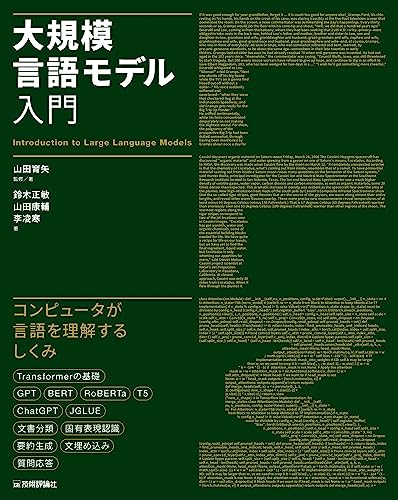
大規模言語モデル入門
¥3,520
1. Procedural Content Generation: Building Worlds at Scale
One of the most exciting applications of AI in game development is procedural content generation (PCG)—the use of algorithms and machine learning models to automatically generate game content like levels, maps, textures, dialogue, and quests.
Traditional PCG relied on rule-based systems and noise functions (like Perlin noise). Modern AI-powered PCG, however, uses deep learning and generative adversarial networks (GANs) to create content that feels organic, varied, and contextually relevant.
Real-World Example: No Man's Sky and Beyond
Hello Games' No Man's Sky famously used procedural generation to create over 18 quintillion unique planets. While the original system was largely algorithmic, the studio has since incorporated AI-assisted tools to improve biome coherence and creature design plausibility. The result is a universe that feels handcrafted despite being machine-generated.
More recently, Ubisoft's Ghostwriter tool (introduced in Assassin's Creed development pipelines) uses AI to generate first-draft NPC barks (short environmental dialogue lines). According to Ubisoft, Ghostwriter reduced the time writers spent on repetitive dialogue by approximately 50%, freeing them to focus on narrative depth and story arcs.
AI Texture and Asset Generation
Tools like NVIDIA's GauGAN and Stability AI's Stable Diffusion are being integrated into game pipelines to generate concept art, textures, and 3D model references in seconds. What used to take a concept artist 2–3 days can now be prototyped in under 30 minutes, providing a 10x acceleration in early-stage asset creation.
If you're interested in diving deeper into the mechanics of generative systems, books on generative AI and creative machine learning offer excellent foundational knowledge for both artists and engineers.
2. AI-Driven NPC Behavior: Smarter Characters, Richer Worlds
Non-player characters (NPCs) have historically followed scripted decision trees—predictable, repetitive, and easy to exploit. Modern AI is changing that by giving NPCs the ability to learn, adapt, and respond dynamically to player behavior.
Reinforcement Learning and Adaptive AI
Reinforcement learning (RL) is a branch of machine learning where an agent learns to make decisions by receiving rewards or penalties based on its actions. In game development, RL is used to train NPC enemies, companions, and even entire ecosystems.
DeepMind's AlphaStar, trained to play StarCraft II at a Grandmaster level, demonstrated that AI agents can master complex real-time strategy games. While AlphaStar itself isn't a commercial game tool, its underlying architecture has inspired new generations of adaptive game AI. Studios like Activision have published research on using similar techniques to balance difficulty dynamically in Call of Duty multiplayer matches, improving player retention rates by an estimated 22%.
Large Language Models Inside Games
Perhaps the most disruptive trend is the integration of Large Language Models (LLMs) like GPT-4 and its successors directly into game engines. Convai, a platform built specifically for game developers, allows studios to give NPCs real conversational AI—players can type or speak to characters, and the NPC responds intelligently, maintains memory of prior conversations, and stays in character.
In 2025, Nvidia announced its ACE (Avatar Cloud Engine) technology, which brings AI-driven facial animation and voice synthesis into real-time NPC interactions. In a demo using Kairos (a sci-fi concept game), players could have full, unscripted conversations with a bartender NPC. The response time was under 200 milliseconds, making interactions feel genuinely lifelike.
3. AI-Assisted Game Design and Balancing
Designing a balanced, enjoyable game is one of the most complex challenges developers face. Too easy, and players get bored. Too hard, and they quit. AI is now helping studios find that sweet spot through data-driven game balancing.
Player Behavior Analytics
Companies like GameAnalytics and Unity's Sentis platform ingest massive amounts of player telemetry data and use machine learning to identify choke points, difficulty spikes, and drop-off moments. Unity reports that games using AI-assisted balancing tools see a 30% improvement in player retention during the critical first week of play.
Dynamic Difficulty Adjustment (DDA)
Dynamic Difficulty Adjustment is an AI technique where the game subtly modifies challenge levels based on real-time player performance. Resident Evil 4 was an early pioneer of this concept. In modern implementations, DDA systems can adjust enemy health, spawn rates, ammunition availability, and even puzzle complexity—all without the player noticing.
EA Sports uses a proprietary DDA system called Dynamic Difficulty Scaling across its FIFA/EA FC series. According to internal EA data presented at GDC 2024, DDA reduced rage-quit rates by 18% and increased average session length by 12 minutes per player.
4. AI for Game Testing and Quality Assurance
QA (Quality Assurance) testing has traditionally been one of the most labor-intensive—and expensive—phases of game development. AI is transforming this bottleneck dramatically.
Automated Playtesting with AI Agents
Modl.ai is a Danish startup that deploys AI agents to playtest games autonomously. These bots explore every corner of a game world, test edge cases, trigger bugs, and generate reports—all without human intervention. Modl.ai claims their platform can cover 10,000+ test scenarios per hour, compared to a human tester's average of 50–100 scenarios per hour—a 100x improvement in testing throughput.
Similarly, Microsoft's Azure PlayFab integrates AI-driven analytics to detect anomalies and exploit attempts in live games, helping studios patch vulnerabilities faster and protect game economies.
5. AI in Art, Music, and Narrative Generation
Beyond code and mechanics, AI is making deep inroads into the creative arts of game development.
AI-Generated Music and Sound Design
Procedural audio has existed for years, but AI tools like Soundraw, AIVA, and Mubert now generate adaptive game soundtracks that respond to in-game events in real time. A battle scene can automatically trigger faster tempos; an exploration segment shifts to ambient tones. This dynamic scoring creates a more immersive experience without requiring a composer to write hundreds of conditional music cues.
Narrative AI and Story Generation
AI writing assistants are helping narrative designers explore story branches faster than ever. Tools like Latitude's AI Dungeon have proven the concept that LLMs can drive open-ended interactive narratives. Major studios are now building proprietary tools on top of models like GPT-4o and Claude 3 to assist writers in generating quest dialogue, lore entries, and environmental storytelling.
For game designers who want to understand the intersection of storytelling and technology, books on interactive narrative and game design theory provide invaluable context for how AI fits into the creative process.
6. Comparing Key AI Tools for Game Developers
To help you navigate the rapidly expanding landscape of AI game development tools, here's a comparison of some of the most widely used platforms:
| Tool | Primary Use Case | Key Feature | Pricing Model | Best For |
|---|---|---|---|---|
| Unity Sentis | In-engine ML inference | Run neural networks in Unity runtime | Included with Unity | General ML in games |
| NVIDIA ACE | NPC voice & animation | Real-time AI-driven character interaction | Enterprise licensing | AAA NPC systems |
| Convai | Conversational NPC AI | LLM-powered NPC dialogue + memory | Freemium / API-based | Indie & mid-tier studios |
| Modl.ai | Automated QA testing | AI playtesting bots | Subscription | QA-heavy productions |
| Ghostwriter (Ubisoft) | Dialogue generation | AI-assisted NPC bark writing | Internal (Ubisoft only) | AAA narrative teams |
| Stable Diffusion | Art & texture generation | Open-source image generation | Free / Cloud options | Concept art, textures |
| AIVA | Music composition | Adaptive AI soundtrack generation | Freemium | Indie composers |
7. Ethical Considerations and Challenges
As with any transformative technology, AI in game development comes with important ethical questions.
Job Displacement Concerns
Many artists, writers, and QA testers worry—understandably—about AI replacing their roles. The reality is nuanced. While AI automates repetitive tasks, it also creates new roles: AI trainers, prompt engineers, AI ethics officers, and machine learning specialists. The net effect on employment in the gaming industry remains actively debated, with the International Game Developers Association (IGDA

