
LLM Cost Optimization: 10 Proven Production Strategies
Published: April 17, 2026
Introduction
Running large language models (LLMs) in production is exhilarating — until the cloud bill arrives.
According to a 2024 report by Andreessen Horowitz, AI infrastructure costs account for 60–80% of total revenue for many AI-native startups. For enterprises scaling generative AI workloads, unchecked LLM inference costs can spiral from thousands to millions of dollars per month almost overnight.
The good news? With the right optimization strategies, companies have documented cost reductions of 50–80% on LLM inference while maintaining — or even improving — response quality. This guide breaks down the most effective, production-proven approaches that engineering and ML teams can implement today.
Sponsored
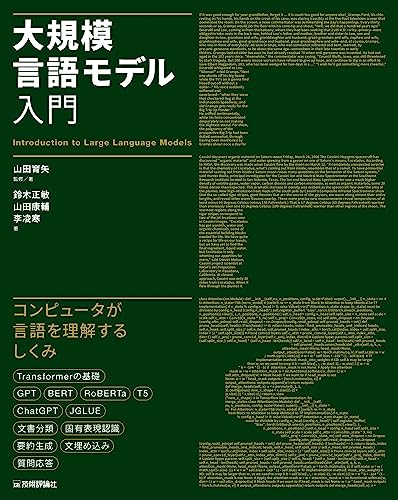
大規模言語モデル入門
¥3,520
Whether you're calling GPT-4o via API, hosting an open-source model like Llama 3 on your own infrastructure, or orchestrating a complex multi-agent pipeline, these strategies will give you the tactical playbook to dramatically reduce your LLM spend.
Why LLM Costs Spiral Out of Control in Production
Before diving into solutions, it's worth understanding why LLM costs balloon in production environments.
The Token Tax
Most LLM providers charge per token — roughly 0.75 words per token. A single GPT-4o API call with a 2,000-token prompt and a 500-token response costs around $0.01–$0.015. That sounds trivial until you scale to 1 million calls per day, which translates to $10,000–$15,000 daily.
Common Cost Antipatterns
- Sending entire documents as context when only a paragraph is relevant
- Calling frontier models (GPT-4, Claude 3.5 Sonnet) for simple classification tasks
- No caching layer, so identical prompts are re-executed repeatedly
- Overly verbose system prompts repeated on every call
- Lack of model routing — using one model for all use cases
Understanding these antipatterns is step one. Eliminating them is where the savings compound.
Strategy 1: Implement Semantic Caching
Semantic caching stores LLM responses and retrieves them for semantically similar (not just identical) future queries. Unlike exact-match caching, it uses embedding-based similarity search to match new queries against previously answered ones.
How It Works
- Incoming user query is converted to a vector embedding
- The embedding is compared against a cache store (e.g., Redis with vector search, Pinecone)
- If similarity score exceeds a threshold (typically 0.92+), the cached response is returned
- No LLM call is made
Real-world example: Mendable.ai, a developer documentation search tool, reported a 35% reduction in API costs after implementing semantic caching using GPTCache. Their cache hit rate stabilized around 40% for their FAQ-heavy use case.
Tools like GPTCache and Redis Vector Search make this relatively straightforward to implement. For teams building semantic caching from scratch, the book on practical vector database design provides excellent foundational knowledge on embedding storage and retrieval patterns.
Strategy 2: Model Routing and Cascading
Not all queries need GPT-4o. A significant portion of production LLM traffic — often 60–70% — consists of simple tasks: intent classification, short summarization, keyword extraction, or templated responses.
Model routing means automatically selecting the cheapest model capable of handling a given query.
Routing Architecture
User Query → Classifier → [Simple Task] → GPT-3.5 / Llama 3 8B (cheap)
                       → [Complex Task] → GPT-4o / Claude 3.5 (powerful)
Real-world example: Notion implemented a model cascade in their AI writing assistant where ~65% of requests are served by a fine-tuned smaller model, reserving GPT-4-class models for complex rewrites and long-form generation. They reported a 42% overall cost reduction from this change alone.
The Cascade Pattern
In a model cascade, you start with a cheap model and only escalate if:
- Confidence score is below a threshold
- Output fails a validation check
- The task complexity flag is triggered
Tools like LiteLLM, RouteLLM (open-source from Lmsys), and Martian provide out-of-the-box routing logic with minimal engineering overhead.
Strategy 3: Prompt Compression and Optimization
Prompts are often bloated with redundant instructions, excessive examples, and verbose context. Prompt compression techniques can reduce token counts by 30–60% without meaningful quality loss.
Techniques
- LLMLingua (Microsoft Research): Compresses prompts by removing low-information tokens based on perplexity scores. Achieves 3–20x compression with less than 2% performance degradation on benchmarks.
- Selective context injection: Use RAG (Retrieval-Augmented Generation) to retrieve only the most relevant document chunks instead of stuffing entire documents into context.
- Instruction distillation: Rewrite verbose system prompts to be concise. "Please carefully read the following and provide a thorough, well-structured response" can almost always be shortened to "Answer concisely."
System Prompt Audit Checklist
- Remove filler phrases and redundant instructions
- Consolidate repeated formatting rules
- Move static context to fine-tuning instead of prompts
- Use structured formats (JSON schema) to constrain response length
Strategy 4: Fine-Tuning for Task-Specific Efficiency
Fine-tuning a smaller open-source model on your specific domain can achieve performance comparable to GPT-4 on narrow tasks at 1/10th the cost per inference.
Real-world example: Grab (Southeast Asia's super app) fine-tuned a Llama 2 13B model for their customer service classification task. The fine-tuned model achieved 96.3% accuracy compared to GPT-4's 97.1% — a mere 0.8% gap — while reducing per-query cost from $0.008 to $0.0004 (a 20x cost reduction).
Fine-Tuning Cost vs. Inference Savings
| Approach | Fine-tune Cost | Inference Cost/1M tokens | Break-even (at 10M tokens/day) |
|---|---|---|---|
| GPT-4o (API) | $0 | ~$10 | N/A |
| Fine-tuned GPT-3.5 | ~$500 | ~$1.50 | < 1 day |
| Fine-tuned Llama 3 8B (self-hosted) | ~$2,000 | ~$0.20 | ~2 days |
| Fine-tuned Mistral 7B (self-hosted) | ~$1,500 | ~$0.18 | ~2 days |
For teams new to fine-tuning workflows, a comprehensive guide to applied machine learning engineering covers the full MLOps pipeline including dataset curation, training, and deployment.
Strategy 5: Batching and Asynchronous Processing
Real-time is expensive. Many LLM workloads don't actually require sub-second latency.
Request batching groups multiple inputs into a single API call, improving throughput and reducing overhead. Most providers offer batch inference APIs at significant discounts:
- OpenAI Batch API: 50% discount vs. standard API
- Anthropic Batch: 50% discount for async batch jobs
- Google Vertex AI: Up to 40% discount for batch prediction
When to Use Async Batching
- Document processing pipelines (invoices, contracts, reports)
- Nightly data enrichment jobs
- Bulk content generation
- Embedding generation for large corpora
If your use case allows a 5–60 minute latency window, batch processing is a near-instant 50% cost cut with zero quality tradeoff.
Strategy 6: Output Length Control and Structured Generation
LLMs are verbose by nature. Left unconstrained, they'll pad responses with caveats, restatements, and filler. Every unnecessary token costs money.
Tactics
- Max token limits: Set aggressive
max_tokensparameters. If your app displays 300-word summaries, cap at 400 tokens (not 2,000). - Structured outputs: Use JSON mode or tool calling to constrain responses to schema-defined fields, eliminating narrative padding.
- Instruction specificity: "List 3 bullet points, max 10 words each" yields dramatically shorter, more usable outputs than "Summarize this."
Structured generation frameworks like Outlines, Guidance, and OpenAI's native structured output mode enforce output schemas, preventing runaway token generation and making downstream parsing trivial.
Strategy 7: Choosing the Right Model for the Right Job
The model landscape has matured dramatically. Choosing the right model is now a primary cost lever.
2025 Model Cost-Performance Comparison
| Model | Provider | Cost (Input/Output per 1M tokens) | Best For | Context Window |
|---|---|---|---|---|
| GPT-4o | OpenAI | $2.50 / $10.00 | Complex reasoning, multimodal | 128K |
| GPT-4o mini | OpenAI | $0.15 / $0.60 | Simple tasks, high volume | 128K |
| Claude 3.5 Haiku | Anthropic | $0.80 / $4.00 | Balanced cost/quality | 200K |
| Claude 3.5 Sonnet | Anthropic | $3. |

