
Latest Trends in Large Language Models (LLMs) 2026
Published: April 10, 2026
Introduction
The world of Large Language Models (LLMs) is evolving at a breathtaking pace. What seemed like science fiction just a few years ago is now powering customer service platforms, writing legal briefs, generating code, and even diagnosing diseases. In 2026, the LLM landscape has matured dramatically — but it hasn't slowed down.
According to a recent report by MarketsandMarkets, the global LLM market is projected to grow from $6.4 billion in 2024 to over $36 billion by 2028, representing a compound annual growth rate (CAGR) of 33.2%. These numbers alone signal that we are in the middle of a fundamental technological transformation.
Whether you are a developer, a business leader, or simply a curious reader, understanding the latest trends in LLMs is essential for staying competitive. In this post, we'll break down the most significant developments shaping the LLM space right now — with concrete examples, real-world applications, and expert insights.
Sponsored
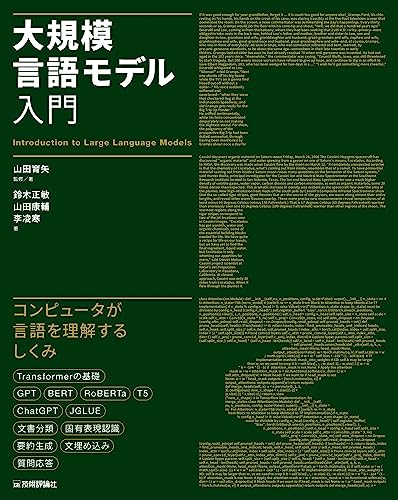
大規模言語モデル入門
¥3,520
1. The Rise of Multimodal LLMs
One of the most significant shifts in recent years is the move from text-only models to multimodal models — systems that can process and generate not just text, but images, audio, video, and even structured data simultaneously.
What Is a Multimodal LLM?
A multimodal LLM is a model capable of understanding and generating content across multiple types of inputs and outputs. For example, you can upload an image and ask the model to explain it, generate a caption, or even write Python code to recreate it.
Real-World Example: Google Gemini Ultra
Google's Gemini Ultra, deployed across Google Workspace and Search, is a prime example of multimodal AI in action. As of 2025, Gemini processes over 1.5 trillion tokens per week across text, images, and code. Businesses using Gemini in Google Docs report a 40% reduction in document drafting time, thanks to its ability to summarize, rewrite, and generate contextual content from embedded visuals.
OpenAI's GPT-4o (the "o" stands for "omni") similarly handles real-time voice, image, and text inputs in a unified architecture, making it significantly more versatile than its predecessors. In early benchmarks, GPT-4o demonstrated a 32% accuracy improvement in visual question answering tasks compared to GPT-4 Vision.
2. Smaller, Faster, and More Efficient Models
Bigger isn't always better. One of the hottest trends in 2026 is the development of Small Language Models (SLMs) and quantized LLMs that deliver near-GPT-4-level performance at a fraction of the computational cost.
Why This Matters
Running a 70-billion-parameter model in the cloud costs money — a lot of it. Many enterprises are now exploring edge deployment, where the model runs locally on a device (like a laptop or smartphone), eliminating latency and privacy concerns.
Key Developments
- Microsoft Phi-3 Mini (3.8B parameters) outperforms models 10x its size on several reasoning benchmarks, showing that smart training data curation matters more than raw scale.
- Meta's Llama 3 family, released in various sizes from 8B to 70B parameters, has become the most downloaded open-source model family on Hugging Face, with over 300 million downloads recorded in 2025 alone.
- Apple's On-Device LLM (integrated into iOS 18+) runs a 3B parameter model entirely on-device, processing personal data like emails and calendar events without ever sending it to the cloud.
These innovations are making LLMs 10x more accessible to individual developers and small businesses that previously couldn't afford enterprise AI subscriptions.
3. LLM-Powered Autonomous Agents
Perhaps the most disruptive trend is the emergence of autonomous AI agents — systems that don't just answer questions but take actions, use tools, browse the web, write and execute code, and complete multi-step tasks with minimal human input.
How Agents Work
At the core of an AI agent is an LLM "brain" paired with a set of tools (APIs, web browsers, databases) and a memory system. The model plans, acts, observes results, and iterates — essentially mimicking how a human worker might tackle a complex project.
Real-World Example: Salesforce Agentforce
Salesforce's Agentforce platform, launched in late 2024, allows companies to deploy AI agents that autonomously handle sales inquiries, update CRM records, draft proposals, and escalate to human agents when needed. In pilot programs, Salesforce reported that companies using Agentforce resolved 83% of customer service cases without human intervention, slashing average handle time by 67%.
Similarly, Cognition AI's Devin — marketed as the world's first AI software engineer — can read a GitHub issue, write a fix, run tests, and submit a pull request autonomously. In internal benchmarks, Devin resolved 13.86% of real-world GitHub issues end-to-end, a number that has since climbed significantly with updated versions.
For those looking to deeply understand the theory behind these autonomous systems, Artificial Intelligence: A Modern Approach by Russell and Norvig remains one of the most comprehensive foundational resources available.
4. Retrieval-Augmented Generation (RAG) Goes Mainstream
Retrieval-Augmented Generation (RAG) is a technique where an LLM is connected to an external knowledge base, allowing it to retrieve relevant documents before generating a response. This solves one of LLMs' biggest problems: hallucination (confidently stating false information).
Why RAG Is Now Essential
Standard LLMs are trained on static datasets with a knowledge cutoff date. RAG enables models to access real-time, domain-specific information — making them dramatically more useful for enterprise use cases like legal research, medical queries, and financial analysis.
RAG in Practice
- LlamaIndex and LangChain have become the go-to open-source frameworks for building RAG pipelines, each boasting over 40,000 GitHub stars.
- Perplexity AI has built an entire search engine product around RAG, attracting over 100 million monthly active users in 2025 by providing cited, real-time answers rather than links.
- Law firms using Harvey AI (a RAG-based legal research tool) report that junior associates can complete research tasks 5x faster than using traditional methods.
5. LLM Benchmarks and Evaluation: A Growing Challenge
As models proliferate, the question of how to measure and compare them has become increasingly complex and contentious.
The Problem with Traditional Benchmarks
Popular benchmarks like MMLU (Massive Multitask Language Understanding) and HellaSwag are being "saturated" — meaning top models now score so close to 100% that they no longer distinguish between competitors. There's also growing concern about benchmark contamination, where training data inadvertently includes test questions.
Emerging Evaluation Frameworks
New evaluation approaches are emerging to address these issues:
| Benchmark | Focus Area | Notable Feature |
|---|---|---|
| MMLU-Pro | Advanced reasoning | Harder, less saturatable |
| LMSYS Chatbot Arena | Human preference | Real-world pairwise comparison |
| HumanEval+ | Code generation | Extended test cases |
| HELMET | Long-context tasks | Tests 128K+ token contexts |
| SafetyBench | Safety & alignment | Red-teaming and refusal testing |
| AgentBench | Agentic behavior | Multi-step task completion |
These newer benchmarks aim to capture real-world utility rather than just academic performance — a crucial distinction as LLMs enter business-critical workflows.
6. LLM Safety, Alignment, and Regulation
As LLMs grow more powerful, so does scrutiny around their safety. AI alignment — ensuring that models behave in ways that are helpful, harmless, and honest — has moved from a niche research topic to a boardroom priority.
Key Developments in 2025–2026
- The EU AI Act came into full force in 2025, requiring organizations deploying "high-risk" AI systems (including LLMs in healthcare and law) to conduct conformity assessments, maintain audit trails, and ensure human oversight.
- Anthropic's Constitutional AI (CAI) approach, used in training Claude 3.5 and beyond, involves the model critiquing its own outputs against a set of ethical principles. This has resulted in Claude scoring highest on safety benchmarks across multiple independent evaluations.
- OpenAI's Preparedness Framework outlines red-line behaviors for frontier models and introduced a formal Safety Advisory Board in 2024 to evaluate catastrophic risk scenarios.
For readers who want to understand the philosophical and technical dimensions of AI safety, The Alignment Problem by Brian Christian offers an accessible yet rigorous exploration of the challenges researchers face.
7. Personalization and Fine-Tuning at Scale
Generic models are powerful, but businesses increasingly want models tailored to their domain, tone, and data. Fine-tuning — the process of further training a base model on specialized datasets — has become dramatically more accessible.
Techniques Driving This Trend
- LoRA (Low-Rank Adaptation): A parameter-efficient fine-tuning method that reduces the cost of customization by 100x compared to full fine-tuning, while retaining ~95% of the performance gains.
- RLHF (Reinforcement Learning from Human Feedback): Used by OpenAI, Anthropic, and Google to align models with human preferences, and now offered as a service through

