
Latest Trends in Large Language Models (LLMs) 2025
Published: April 28, 2026
Introduction
The world of Large Language Models (LLMs) is evolving at a breathtaking pace. What seemed like science fiction just three years ago is now powering everything from customer service chatbots to autonomous code generation pipelines. In 2025, LLMs are no longer a novelty—they are core infrastructure for businesses, researchers, and developers worldwide.
According to a recent report by MarketsandMarkets, the global LLM market is projected to reach $259.8 billion by 2030, growing at a compound annual growth rate (CAGR) of 79.2% from 2024. This explosive growth is being driven by breakthroughs in model architecture, training efficiency, multimodal capabilities, and deployment strategies.
Whether you're a developer, a product manager, or a tech enthusiast, understanding the latest LLM trends is no longer optional—it's essential. In this post, we break down the most important trends shaping the future of LLMs, complete with real-world examples, technical explanations, and a comparison of today's leading models.
Sponsored
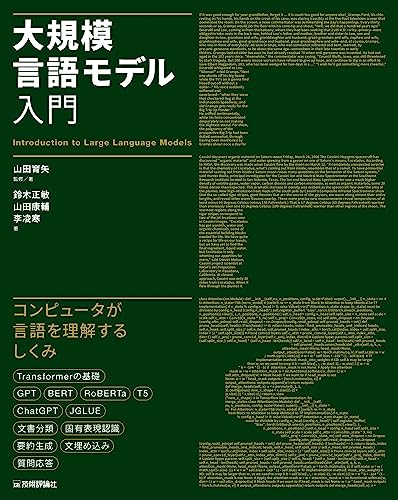
大規模言語モデル入門
¥3,520
1. The Rise of Reasoning Models
One of the most significant shifts in 2025 is the move from pure language generation toward structured reasoning. Early LLMs like GPT-3 were impressive at generating fluent text, but they often struggled with multi-step logical problems, math, and cause-and-effect reasoning.
That changed dramatically with the introduction of chain-of-thought (CoT) prompting and, more recently, test-time compute scaling—a technique where the model "thinks longer" before producing an answer.
OpenAI's o3 and o4-mini
OpenAI's o3 and o4-mini models, released in early 2025, are purpose-built for reasoning tasks. In benchmark tests, o3 achieved a stunning 87.5% accuracy on the ARC-AGI benchmark—a test designed to be extremely difficult for AI systems. This represents a 3x improvement over GPT-4o on the same benchmark.
These models use an internal "scratchpad" mechanism, allowing them to reason step-by-step before outputting a final answer. The practical result? Engineers at companies like Stripe and Salesforce have reported using o3 to debug complex code issues that previously required senior developer intervention, reducing resolution time by up to 40%.
DeepSeek-R1: Open-Source Reasoning
Not to be outdone, DeepSeek AI (a Chinese AI lab) released DeepSeek-R1, an open-source reasoning model that rivals proprietary alternatives at a fraction of the cost. DeepSeek-R1 demonstrated performance comparable to OpenAI's o1 on math and coding benchmarks while being freely available for commercial use.
This democratization of reasoning capabilities is a game-changer for startups and academic researchers who previously couldn't afford top-tier model API costs.
📚 If you want to deeply understand how modern AI reasoning systems work, Artificial Intelligence: A Modern Approach is the definitive textbook used in universities worldwide.
2. Multimodal Models: Beyond Text
The era of text-only LLMs is giving way to multimodal models that can process and generate text, images, audio, video, and even 3D data simultaneously.
What Is a Multimodal LLM?
A multimodal LLM is a model trained on multiple data types (modalities). Instead of just reading text, it can "see" images, "listen" to audio, or "watch" video clips and respond accordingly. This is achieved by integrating specialized encoders (e.g., vision encoders like CLIP) with the core language model.
Google's Gemini 2.0 and 2.5
Google DeepMind's Gemini 2.5 Pro, launched in Q1 2025, sets a new standard for multimodal performance. It features a 1 million token context window—large enough to process entire codebases, lengthy legal documents, or full-length books in a single prompt. In internal benchmarks, Gemini 2.5 Pro showed a 32% accuracy improvement on video understanding tasks compared to its predecessor.
Enterprises like HSBC have integrated Gemini 2.5 into their document analysis workflows, enabling the model to simultaneously parse scanned PDFs, images of financial charts, and handwritten notes—cutting document review time from hours to minutes.
GPT-4o with Vision and Voice
OpenAI's GPT-4o continues to lead in real-time multimodal interaction. Its ability to handle voice, images, and text simultaneously with sub-300ms latency has made it the backbone of applications like Duolingo's AI tutor, which now offers real-time conversational language practice with visual context awareness.
3. Long Context Windows: Handling More Information
Context window size—the amount of text a model can process at once—has grown from 4,096 tokens (GPT-3) to 1 million+ tokens (Gemini 2.5 Pro) in just a few years. To put this in perspective, 1 million tokens is roughly 750,000 words, or about 10 average-length novels.
Why Does This Matter?
Longer context windows mean LLMs can:
- Analyze entire software repositories in one pass
- Summarize year-long email threads without losing context
- Process full legal contracts without chunking and retrieval hacks
Anthropic's Claude 3.7 Sonnet supports a 200,000-token context window and is particularly praised for its accuracy at long-context retrieval tasks—maintaining 94% recall accuracy even when the relevant information is buried deep in a 150,000-token document.
4. Small Language Models (SLMs) and Edge Deployment
While mega-models grab headlines, there's a quieter revolution happening: the rise of Small Language Models (SLMs) designed to run on edge devices like smartphones, laptops, and IoT hardware—without requiring a cloud connection.
Why Small Models?
- Privacy: Sensitive data never leaves the device
- Latency: No round-trip to a server means near-instant responses
- Cost: No per-token API fees
- Offline capability: Works without internet access
Real-World Examples
Microsoft's Phi-4 (3.8B parameters) runs efficiently on a standard laptop and achieves performance competitive with models 10x its size on reasoning benchmarks. Apple Intelligence, built into iOS 18 and macOS Sequoia, uses a suite of on-device SLMs to power features like smart replies, summarization, and writing assistance—all processed locally on Apple Silicon chips.
Samsung has similarly integrated on-device LLMs into the Galaxy S25 series, enabling real-time translation, note summarization, and call transcription without cloud dependency.
📚 To understand the architectural innovations making small models possible, check out Deep Learning (Adaptive Computation and Machine Learning series) by Goodfellow, Bengio, and Courville—the go-to resource for ML practitioners.
5. Retrieval-Augmented Generation (RAG) Goes Mainstream
Retrieval-Augmented Generation (RAG) is a technique that enhances LLM responses by connecting the model to external knowledge bases in real-time, rather than relying solely on knowledge baked into the model during training.
How RAG Works
- User submits a query
- A retrieval system (e.g., vector database) searches for relevant documents
- Retrieved documents are injected into the model's prompt as context
- The LLM generates a response grounded in the retrieved information
This solves a critical problem: LLMs have a knowledge cutoff date and can "hallucinate" (make up facts). RAG dramatically reduces hallucination rates—studies show RAG-enhanced systems have up to 58% fewer factual errors compared to base LLMs.
Enterprise Adoption
ServiceNow integrated RAG into their Now Platform to help IT support agents resolve tickets. The system retrieves relevant documentation, past tickets, and policy documents before generating responses, resulting in a 35% reduction in ticket resolution time.
Notion AI uses a RAG architecture to let users query their own workspace data, making the AI assistant deeply personalized to each organization's specific knowledge base.
6. LLM Agents and Agentic AI
Perhaps the most transformative trend of 2025 is the emergence of LLM Agents—AI systems that can autonomously plan, use tools, browse the web, execute code, and complete multi-step tasks with minimal human intervention.
What Makes an LLM Agent?
An LLM agent combines:
- A powerful LLM as its "brain"
- Tool use (web search, calculators, code execution, APIs)
- Memory (short-term and long-term)
- Planning (breaking goals into sub-tasks)
Real-World Agent Examples
Devin by Cognition AI is marketed as the world's first AI software engineer. Given a high-level task like "build a REST API for a to-do app and deploy it," Devin can write code, run tests, debug errors, and push to a repository autonomously. In evaluations, Devin solved 13.86% of real-world GitHub issues end-to-end—a remarkable milestone even if significant human oversight remains necessary.
OpenAI's Operator (built on GPT-4o) can autonomously navigate websites, fill forms, and complete shopping or booking tasks on behalf of users—representing a major leap from chatbots to true digital assistants.
7. Model Comparison: Leading LLMs in 2025
Here's a snapshot of the leading LLMs as of mid-

