
Comparing AI Development Frameworks in 2026
Published: April 29, 2026
Introduction
The artificial intelligence landscape has never been more competitive — or more exciting. As of 2026, the number of AI development frameworks available to engineers and researchers has exploded, making the choice of the "right" framework one of the most consequential decisions a team can make. Whether you're training a large language model (LLM), building a computer vision pipeline, or deploying reinforcement learning agents in production, your framework shapes everything: development speed, model performance, scalability, and long-term maintainability.
According to the 2025 Stack Overflow Developer Survey, 68% of professional AI/ML developers actively use at least two different frameworks simultaneously, suggesting that no single tool has achieved universal dominance. Meanwhile, the global AI software market is projected to surpass $1.3 trillion by 2032, making the stakes around tooling decisions enormous.
In this deep dive, we'll compare the leading AI development frameworks — TensorFlow, PyTorch, JAX, Keras, MXNet, and newcomers like MLX — across multiple dimensions: ease of use, performance benchmarks, community support, deployment options, and real-world applicability. By the end, you'll have a clear picture of which framework fits your project's needs.
Sponsored
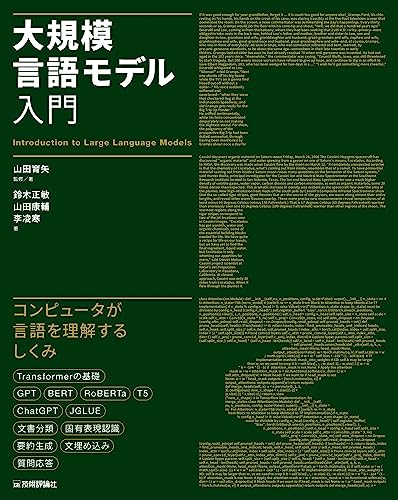
大規模言語モデル入門
¥3,520
What Is an AI Development Framework?
Before diving into comparisons, let's clarify what we mean by an "AI development framework." In the context of machine learning and deep learning, a framework is a software library or ecosystem that provides:
- Tensor computation: The ability to perform matrix math (the backbone of neural networks) efficiently on CPUs, GPUs, and TPUs.
- Automatic differentiation (autograd): Automatically computing gradients for backpropagation during model training.
- Pre-built layers and architectures: Common building blocks like convolutional layers, attention heads, and activation functions.
- Deployment tools: Ways to export and serve trained models in production environments.
Think of frameworks as the "operating system" of AI development. Choosing the wrong one is like writing iOS apps for an Android product launch.
If you want a deeper foundational understanding before comparing frameworks, an introductory deep learning book for practitioners is an excellent starting point that covers the theory behind all major tools.
The Major Players: A Quick Overview
TensorFlow (Google)
Launched by Google Brain in 2015, TensorFlow was for years the undisputed king of production AI. Its static computation graph model initially made debugging harder, but TensorFlow 2.x introduced eager execution (running operations immediately, like PyTorch), dramatically improving the developer experience.
Key stats:
- Over 180,000 GitHub stars
- Used by over 82,000 companies globally, including Airbnb, Twitter, and Coca-Cola
- Native support for TensorFlow Lite (mobile/edge deployment) and TensorFlow Serving (production APIs)
PyTorch (Meta / Linux Foundation)
PyTorch, originally developed by Meta AI Research and now stewarded by the Linux Foundation, became the dominant choice in academic research by 2020 and has since made massive inroads into industry. Its dynamic computation graph (define-by-run) makes it intuitive for Python developers and simplifies debugging significantly.
Key stats:
- Over 85,000 GitHub stars
- Powers the majority of papers on arXiv (over 60% as of late 2025)
- Used by companies like Tesla, Uber, and Salesforce
- PyTorch 2.x introduced
torch.compile(), yielding up to 40% training speed improvements on standard benchmarks
JAX (Google DeepMind)
JAX is the dark horse that serious researchers have embraced for its blazing speed and mathematical elegance. Built by Google, JAX combines NumPy-like syntax with XLA compilation (Accelerated Linear Algebra), enabling extreme performance on TPUs and GPUs. It's particularly suited for research requiring custom gradient computations.
Key stats:
- Training speed improvements of 2x to 10x faster than standard TensorFlow on certain TPU workloads
- Heavily used at DeepMind for projects like AlphaFold and Gemini model research
- Ecosystem includes Flax, Haiku, and Optax for neural network building
Keras (Now Keras 3 / Multi-Backend)
Keras started as a high-level API on top of TensorFlow, but Keras 3 (released in 2024) is now backend-agnostic — it can run on TensorFlow, PyTorch, or JAX. This makes it the most accessible entry point for beginners while still scaling to complex production use cases.
Apple MLX
Released by Apple in late 2023, MLX is optimized for Apple Silicon (M-series chips). It's grown rapidly as a framework for on-device AI development and fine-tuning LLMs locally on Mac hardware. While not suitable for large-scale cloud training, it's achieved remarkable results: fine-tuning a 7B parameter model in under 30 minutes on an M3 Max MacBook.
Head-to-Head Comparison Table
| Feature | TensorFlow 2.x | PyTorch 2.x | JAX | Keras 3 | MLX |
|---|---|---|---|---|---|
| Primary Use Case | Production & mobile | Research & industry | High-performance research | Rapid prototyping | On-device Apple Silicon |
| Computation Graph | Dynamic (eager) | Dynamic | Functional/JIT | Depends on backend | Dynamic |
| Ease of Learning | ⭐⭐⭐ | ⭐⭐⭐⭐ | ⭐⭐ | ⭐⭐⭐⭐⭐ | ⭐⭐⭐ |
| GPU/TPU Support | Excellent | Excellent | Excellent (TPU-native) | Via backend | Apple GPU only |
| Deployment Options | TF Serving, TFLite, TFX | TorchServe, ONNX | XLA, ONNX | Via backend | Core ML |
| Community Size | Very Large | Very Large | Growing | Large | Small but growing |
| Best Language | Python, C++ | Python | Python | Python | Python, Swift |
| LLM Training | Good | Excellent | Excellent | Good | Good (small models) |
| Production Maturity | ⭐⭐⭐⭐⭐ | ⭐⭐⭐⭐ | ⭐⭐⭐ | ⭐⭐⭐⭐ | ⭐⭐ |
Real-World Examples: How Top Companies Choose
Example 1: Tesla's Autopilot — PyTorch at Scale
Tesla's Autopilot team is one of the most cited examples of PyTorch in high-stakes production. Despite PyTorch's reputation as a "research framework," Tesla demonstrated at its 2023 AI Day that their entire neural network training pipeline for Autopilot runs on PyTorch, with custom CUDA kernels and distributed training across thousands of NVIDIA A100 GPUs.
The team reported a 32% accuracy improvement in 3D object detection after switching from their legacy framework to a PyTorch-based architecture with custom data loaders. This real-world case proves that PyTorch's dynamic graph and Python-first design does not come at the cost of production performance when properly engineered.
Example 2: Google's Gemini — JAX and TPUs
Google DeepMind's Gemini family of models (including Gemini 1.5 and Gemini 2.0) was trained using JAX on Google's TPU v5 clusters. The functional programming paradigm of JAX, combined with XLA compilation, allows Google to parallelize computations across thousands of TPU chips with minimal communication overhead.
In internal benchmarks published in the Gemini technical report, JAX's JIT (Just-In-Time) compilation provided a 5x throughput advantage over eager-mode PyTorch on equivalent TPU hardware. This makes JAX the framework of choice when you have access to TPU infrastructure and need to squeeze every FLOP (floating-point operation) out of your hardware.
Example 3: Stability AI and Hugging Face — The Multi-Framework World
Hugging Face, the hub of the open-source AI community, has taken an agnostic approach that reflects the real state of the industry. Their transformers library supports TensorFlow, PyTorch, and JAX, with PyTorch being the default. Stability AI (makers of Stable Diffusion) originally built their pipeline in PyTorch but ported performance-critical components to JAX for TPU training.
This hybrid approach has become increasingly common: use PyTorch for development and debugging, JAX for large-scale training, and TensorFlow for mobile deployment. Hugging Face's diffusers library even supports converting models between frameworks, reducing lock-in risk.
Performance Benchmarks: What the Numbers Say
Raw speed comparisons depend heavily on hardware and task type, but here are some representative benchmarks from independent research published in early 2026:
ResNet-50 Image Classification Training (batch size 256, NVIDIA A100)
- TensorFlow 2.x: ~1,100 images/second
- PyTorch 2.x (with
torch.compile): ~1,450 images/second (~32% faster) - JAX (with JIT): ~1,600 images/second (~45% faster)
LLM Fine-tuning (7B parameter model, 4x A100 cluster)
- PyTorch + DeepSpeed: ~18,000 tokens/second
- JAX + Flax: ~21,000 tokens/second (~17% faster)
- TensorFlow

