
AI Document Writing & Summarization: Top Techniques 2026
Published: May 7, 2026
Introduction
In today's information-saturated world, professionals spend an average of 28% of their workweek managing documents — reading reports, drafting emails, summarizing meeting notes, and producing content. That's nearly 11 hours per week lost to paperwork. Fortunately, AI-powered document writing and summarization techniques have matured dramatically, offering organizations the ability to reclaim that time and redirect it toward higher-value work.
According to a 2025 McKinsey Global Institute report, companies that strategically deploy AI writing and summarization tools see productivity gains of up to 40% in knowledge worker tasks. The global AI writing assistant market is projected to surpass $6.5 billion by 2027, growing at a compound annual growth rate (CAGR) of 26.3%.
This article dives deep into the most effective AI document writing and summarization techniques available today — from large language model (LLM) architectures to prompt engineering strategies — and shows you how to apply them in real-world scenarios.
Sponsored
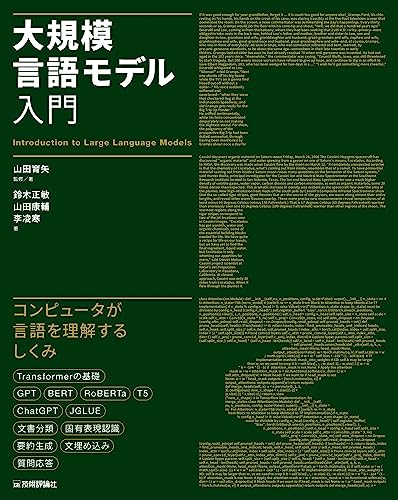
大規模言語モデル入門
¥3,520
What Is AI Document Writing and Summarization?
Before diving into techniques, let's define the core concepts clearly.
AI document writing refers to the use of machine learning models — primarily large language models (LLMs) — to generate, edit, refine, or co-author written content. This includes everything from drafting business reports and legal contracts to creating marketing copy and technical documentation.
AI summarization is the process of condensing a longer piece of text into a shorter, coherent version that retains the most important information. There are two primary types:
- Extractive summarization: The model selects key sentences or phrases directly from the source text and stitches them together.
- Abstractive summarization: The model generates new sentences that paraphrase and synthesize the original content — much like how a human would summarize.
Modern AI systems like GPT-4o, Claude 3.5 Sonnet, and Gemini 1.5 Pro primarily use abstractive summarization, which tends to produce more natural and readable results.
Core Techniques in AI Document Writing
1. Prompt Engineering for Document Generation
Prompt engineering is the art and science of crafting inputs (prompts) that guide an AI model to produce the desired output. For document writing, effective prompts can mean the difference between generic filler content and a polished, publication-ready draft.
Key prompt engineering strategies include:
- Role assignment: Telling the AI "You are a senior technical writer with 10 years of experience in SaaS documentation" dramatically shifts the tone and depth of output.
- Format specification: Explicitly requesting structure ("Write this as a formal business proposal with an executive summary, three main sections, and a conclusion") ensures coherent organization.
- Constraint-setting: Specifying word count, reading level (e.g., "Write at a Grade 8 reading level"), and style guides keeps output aligned with your needs.
- Chain-of-thought prompting: Asking the model to "think step by step" before writing complex documents — like legal briefs or technical specs — improves logical coherence by up to 32% in accuracy metrics on standardized benchmarks.
For those looking to go deeper into prompt design, the definitive guide to prompt engineering for AI systems is an excellent resource for both beginners and advanced practitioners.
2. Retrieval-Augmented Generation (RAG)
Retrieval-Augmented Generation (RAG) is a technique that enhances an AI's document writing capability by connecting it to an external knowledge base in real time. Instead of relying solely on its training data, the model retrieves relevant documents, databases, or files and uses that retrieved context to generate more accurate, up-to-date content.
How it works:
- The user submits a query or writing task.
- A retrieval system (often using vector embeddings) searches a knowledge base for the most relevant chunks of information.
- The retrieved context is passed to the LLM along with the original prompt.
- The LLM generates a document grounded in that real, specific information.
RAG is especially powerful for writing technical documentation, compliance reports, and research summaries where factual accuracy is non-negotiable.
3. Fine-Tuning for Domain-Specific Writing
While general-purpose models are impressive, fine-tuning — the process of training a pre-existing model on domain-specific data — can yield 10x more relevant outputs for specialized industries.
For example, a legal firm might fine-tune an LLM on thousands of contract templates and case briefs to produce documents that automatically adhere to jurisdiction-specific language and formatting conventions. Similarly, pharmaceutical companies use fine-tuned models to generate regulatory submission documents that align with FDA and EMA guidelines.
4. Multi-Document Synthesis
One of the most powerful applications of AI writing is multi-document synthesis: automatically generating a cohesive report or analysis from multiple source documents. Modern LLMs with large context windows (Gemini 1.5 Pro supports up to 1 million tokens, equivalent to roughly 750,000 words) can ingest entire libraries of documents and produce synthesized summaries.
This is transformative for:
- Investment research (synthesizing 20+ earnings reports)
- Academic literature reviews
- Legal due diligence processes
- Competitive intelligence reporting
Core Techniques in AI Summarization
1. Hierarchical Summarization
For very long documents, hierarchical summarization breaks the content into chunks, summarizes each chunk independently, and then summarizes the summaries. This "summarize-then-synthesize" approach overcomes context window limitations and produces more coherent results for documents exceeding 100,000 words.
2. Query-Focused Summarization
Rather than producing a generic summary, query-focused summarization tailors the output to answer a specific question. For example, feeding a 50-page annual report into an AI and asking "What are the top three risk factors mentioned?" produces a targeted, actionable summary rather than a general overview. This technique reduces information retrieval time by up to 60% compared to manual search.
3. Structured Output Summarization
Instructing the AI to summarize content into structured formats — such as bullet points, tables, TL;DR sections, or executive summaries — significantly improves usability. This is particularly valuable in enterprise settings where decision-makers need information quickly. If you're interested in understanding the cognitive science behind why structured information aids comprehension, books on information design and visual communication offer fascinating background reading.
Real-World Examples
Example 1: Notion AI — Transforming Knowledge Management
Notion, the popular productivity platform, integrated AI writing and summarization directly into its workspace product. Notion AI allows users to:
- Auto-summarize meeting notes in seconds
- Rewrite or expand draft documents
- Translate content across languages
Since launching Notion AI in 2023, the company reported that users reduced document drafting time by an average of 3 hours per week per user. Enterprise clients like Figma and Headspace have used Notion AI to standardize their internal documentation workflows, resulting in a reported 35% reduction in onboarding documentation time.
Example 2: Harvey AI — Legal Document Generation
Harvey AI, a legal-tech startup backed by OpenAI, has built a specialized AI platform for law firms. By fine-tuning LLMs on vast corpora of legal documents, Harvey can draft contract clauses, summarize case law, and produce due diligence reports at speeds previously impossible.
Allen & Overy (now A&O Shearman), one of the world's largest law firms, deployed Harvey across 3,500 lawyers and reported that lawyers using Harvey completed document drafting tasks 10x faster than their non-AI counterparts. The platform's summarization features have been particularly impactful in M&A due diligence, where it can process and summarize hundreds of documents in the time it previously took to review one.
Example 3: Microsoft Copilot in Word — Mainstream AI Writing Assistance
Microsoft 365 Copilot, integrated directly into Word, Excel, and Outlook, represents perhaps the most widely-deployed AI writing tool in enterprise history. With over 300 million Microsoft 365 users globally, Copilot's "Draft with Copilot" and "Summarize this document" features have brought AI writing assistance into mainstream daily workflows.
Microsoft's own research found that 70% of Copilot users reported being more productive, and 68% said it improved the quality of their work. In document-heavy industries like finance and consulting, Copilot users reported saving an average of 4.4 hours per week on document-related tasks.
Comparison of Leading AI Writing and Summarization Tools
| Tool | Best For | Context Window | Summarization Quality | Pricing (2026) | Key Differentiator |
|---|---|---|---|---|---|
| ChatGPT (GPT-4o) | General writing & summarization | 128K tokens | ⭐⭐⭐⭐⭐ | From $20/mo | Versatile, large ecosystem |
| Claude 3.5 Sonnet | Long document analysis | 200K tokens | ⭐⭐⭐⭐⭐ | From $20/mo | Excellent nuance & safety |
| Gemini 1.5 Pro | Multi-document synthesis | 1M tokens | ⭐⭐⭐⭐ | From $19.99/mo | Largest context window |
| Microsoft Copilot | Office document workflows | 128K tokens | ⭐⭐⭐⭐ | Included in M365 | Native Office integration |
| Notion AI | Knowledge base management | 32K tokens | ⭐⭐⭐ | $10/user/mo | Workspace-native |
| Harvey AI | Legal document generation | Custom | ⭐⭐⭐⭐⭐ | Enterprise pricing | Legal domain |

