AI and Robotics in Manufacturing: The Industry Revolution
Published: April 15, 2026
Introduction
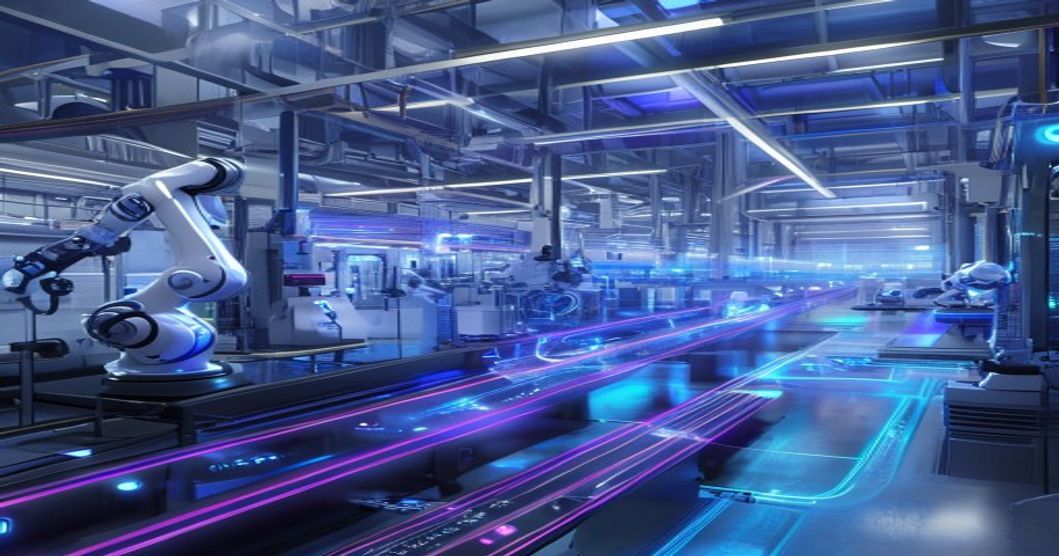
The factory floor of 2026 looks almost unrecognizable compared to what it was just a decade ago. Where rows of human workers once performed repetitive assembly tasks, collaborative robots—or "cobots"—now work shoulder-to-shoulder with their human counterparts. Overhead cameras feed real-time data into machine learning algorithms that predict equipment failures before they happen. Digital twins simulate entire production lines in virtual space, allowing engineers to optimize processes without stopping a single conveyor belt.
This is not science fiction. This is the new reality of AI and robotics in manufacturing, and the numbers are staggering.
According to a 2025 report by McKinsey & Company, AI-driven automation in manufacturing is expected to generate between $1.4 trillion and $3.3 trillion in annual value by 2030. Meanwhile, the International Federation of Robotics (IFR) reported that global robot installations reached a record 553,052 units in 2024 alone—a 12% increase year-over-year. Manufacturers who have fully embraced AI-powered systems are reporting up to 40% reductions in operational costs and 25–35% improvements in production throughput.

Sponsored
大規模言語モデル入門
¥3,520
But what exactly is driving this transformation? How are companies implementing these technologies, and what challenges remain? In this post, we'll break it all down—from the core technologies to real-world case studies, key comparisons, and what the future holds for human workers in an increasingly automated world.
What Is Industry 4.0 and Why Does It Matter?
Before diving into specifics, it's worth understanding the broader framework: Industry 4.0. This term, coined in Germany around 2011, refers to the fourth industrial revolution—characterized by the integration of digital technologies, cyber-physical systems, the Internet of Things (IoT), and artificial intelligence into manufacturing processes.
Think of it this way:
- Industry 1.0 = Steam power (late 18th century)
- Industry 2.0 = Electricity and mass production (early 20th century)
- Industry 3.0 = Computers and early automation (1970s–2000s)
- Industry 4.0 = AI, robotics, big data, and interconnected smart factories (now)
In a smart factory powered by Industry 4.0 principles, machines communicate with each other, supply chains self-optimize, and human decision-making is augmented—not replaced—by real-time AI insights. If you want to go deeper on this topic, The Fourth Industrial Revolution by Klaus Schwab is an excellent foundational read that explains how these forces are reshaping not just manufacturing, but every sector of the global economy.
Key AI Technologies Powering Modern Manufacturing
1. Machine Learning and Predictive Maintenance
One of the most impactful applications of AI in manufacturing is predictive maintenance—using machine learning models to predict when equipment is likely to fail before it actually does.
Traditional maintenance approaches are either reactive (fix it when it breaks) or scheduled (replace parts every X months regardless of condition). Both are inefficient. Predictive maintenance, powered by sensors and ML algorithms, analyzes real-time data—vibration, temperature, acoustic signals, power consumption—to flag anomalies early.
The results are striking:
- Siemens reports that AI-powered predictive maintenance has reduced unplanned downtime by up to 50% at their facilities.
- General Electric's Predix platform has helped industrial customers achieve 10–25% reductions in maintenance costs.
- A 2024 Deloitte study found that predictive maintenance programs deliver an average ROI of 10x over three years.
2. Computer Vision and Quality Control
Human inspectors, no matter how skilled, have physical limitations. They get tired, they have variability in judgment, and they can only inspect so many units per hour. AI-powered computer vision systems don't have these constraints.
Modern computer vision systems for manufacturing use convolutional neural networks (CNNs)—a type of deep learning architecture specifically designed to process visual data—to detect defects with extraordinary precision. These systems can inspect thousands of items per minute, identifying cracks, misalignments, color deviations, or surface imperfections that are invisible to the naked eye.
Real-world performance metrics:
- BMW Group deployed AI vision systems on its production line that detect paint defects with 32% greater accuracy than human inspectors.
- LG Electronics uses deep learning-based optical inspection that processes 10x more units per hour than traditional methods.
- Foxconn's AI quality control systems have reportedly reduced defect escape rates by over 60% at select iPhone assembly facilities.
3. Digital Twins
A digital twin is a virtual replica of a physical asset, process, or system—updated in real-time using sensor data. In manufacturing, digital twins allow companies to simulate changes to a production line, test new configurations, or model the impact of a supply chain disruption—all without touching the physical system.
Siemens, one of the pioneers in this space, uses its Xcelerator platform to create digital twins of entire factories. Engineers can simulate years of wear-and-tear in minutes, or test 500 different production configurations in a day. The company estimates that digital twin technology reduces time-to-market for new products by up to 30%.
Real-World Case Studies
Case Study 1: Tesla's Gigafactories
Tesla's Gigafactories represent perhaps the most ambitious attempt at a fully AI-integrated manufacturing environment in the world. At Giga Berlin and Giga Texas, Tesla uses a combination of:
- Autonomous mobile robots (AMRs) to transport materials across the factory floor
- AI-powered welding robots that self-adjust parameters based on real-time feedback
- Computer vision to perform automated quality checks at every stage of battery cell and vehicle assembly
- Predictive analytics to optimize energy consumption—important given that gigafactories are among the most energy-intensive facilities on earth
The result? Tesla claims its newest gigafactories can produce a vehicle in approximately 45 seconds of net robot-assisted assembly time—a staggering figure that underscores how radically AI and robotics can compress production timelines.
Case Study 2: Fanuc's Self-Learning Robots
Fanuc, the Japanese industrial robotics giant, has developed a system called FIELD (Fanuc Intelligent Edge Link and Drive)—an IoT platform that connects all machines in a factory and uses deep learning to enable robots to teach themselves new tasks.
One of Fanuc's most impressive demonstrations involved robots learning to pick randomly oriented objects from a bin—a notoriously difficult task called bin picking. Using reinforcement learning (a type of AI where the system learns through trial and error), Fanuc's robots improved their bin-picking success rate from 60% to over 90% after just eight hours of self-training. This capability dramatically reduces the time and cost associated with programming robots for new tasks.
Case Study 3: Bosch's AI-Powered Supply Chain
Robert Bosch GmbH, the German engineering multinational, has deployed AI across its global supply chain with remarkable results. Its AI-powered demand forecasting system analyzes thousands of variables—including macroeconomic indicators, weather patterns, historical sales data, and even social media sentiment—to predict component demand with 85% accuracy, compared to 60–65% for traditional statistical methods.
This improved forecasting has allowed Bosch to:
- Reduce inventory carrying costs by $1.2 billion annually
- Cut lead times by an average of 22%
- Virtually eliminate stockouts for over 8,000 critical components
Comparing Key AI and Robotics Platforms for Manufacturing
With so many tools available, choosing the right platform can be overwhelming. Here's a comparison of some of the leading solutions:
| Platform | Developer | Key Strength | Best For | Pricing Model |
|---|---|---|---|---|
| Predix | GE Digital | Industrial IoT & analytics | Heavy industry, energy | Enterprise contract |
| MindSphere | Siemens | Digital twins & simulation | Automotive, electronics | Subscription |
| AWS Industrial AI | Amazon | Cloud-scale ML & vision | SME to enterprise | Pay-as-you-go |
| FIELD System | Fanuc | Robot self-learning | Discrete manufacturing | Hardware + license |
| Vuforia | PTC | AR-assisted maintenance | Aerospace, defense | Subscription |
| Cognex Vision | Cognex | Quality inspection vision | Food, pharma, auto | Hardware + software |
| C3.ai | C3.ai | Predictive maintenance AI | Oil & gas, utilities | Enterprise SaaS |
Each platform has different strengths depending on your industry, scale, and specific use case. SMEs (small and medium enterprises) often find AWS Industrial AI or C3.ai more accessible due to flexible pricing, while large manufacturers typically invest in Siemens MindSphere or Fanuc's ecosystem for deeper integration.
Addressing the Human Factor: Jobs, Skills, and the Future of Work
One of the most controversial questions surrounding AI and robotics in manufacturing is the impact on human employment. The reality is more nuanced than the "robots will take all jobs" narrative suggests.
Yes, certain roles are being automated:
- Repetitive assembly tasks
- Manual quality inspection
- Material transport within facilities
- Data entry and production reporting
But new roles are being created:
- Robot maintenance and programming technicians
- AI data analysts and model trainers
- Human-robot collaboration (HRC) coordinators
- Digital twin engineers
- Cybersecurity specialists for OT (Operational Technology) networks
The World Economic Forum's Future of Jobs Report 2025 estimates that while automation will displace approximately 85 million jobs globally by 2030, it will create 97 million new roles—a net positive, though the transition will require massive investment in reskilling and upskilling.
For workers and managers looking to navigate this transition, [Humans + Machines: Reimagining Work in the Age of AI](https://www.amazon.co.jp/s?k=Humans

