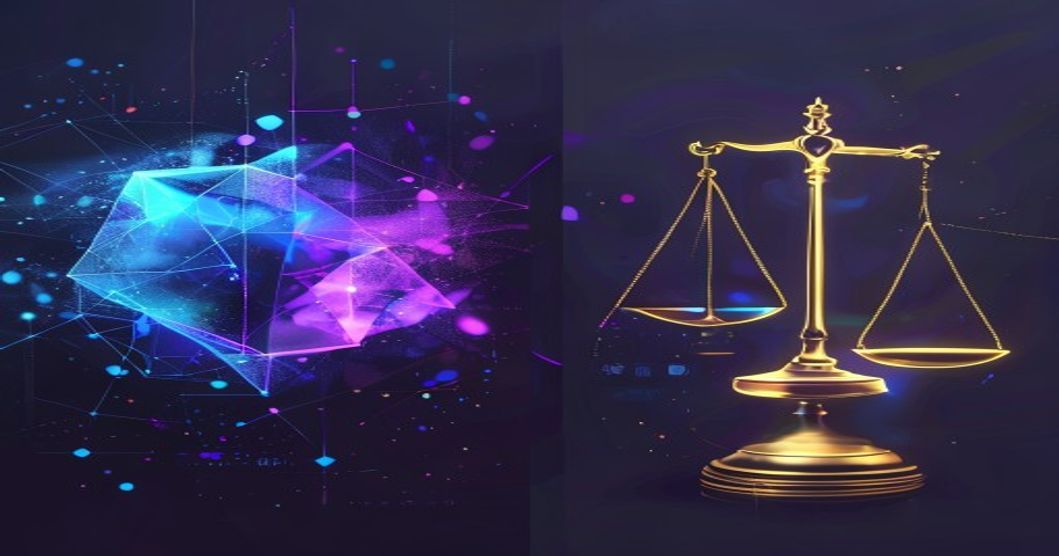
AI and Copyright: Navigating Intellectual Property
Published: April 23, 2026
Introduction
Artificial intelligence is reshaping nearly every creative industry — from music and visual art to journalism and software development. But with this rapid transformation comes a thorny, unresolved question: who owns the content that AI creates, and who is responsible when AI reproduces someone else's work?
In 2023 alone, over 200 major copyright-related lawsuits involving AI were filed globally, and that number has only climbed since. Governments, courts, and corporations are scrambling to keep pace with technology that moves faster than legislation. Whether you're a content creator, a business deploying AI tools, or simply a curious reader, understanding the intersection of AI and copyright law is no longer optional — it's essential.
This blog post breaks down the key concepts, real-world cases, and practical frameworks you need to navigate intellectual property in the age of artificial intelligence.
Sponsored
大規模言語モデル入門
¥3,520
What Is Copyright, and Why Does AI Challenge It?
Copyright is a legal protection granted to original works of authorship — including books, paintings, music, software, and photographs. In most jurisdictions, copyright is automatically assigned to the human creator at the moment of creation, giving them exclusive rights to reproduce, distribute, and monetize their work.
Here's where AI complicates things dramatically:
- AI can generate "original" content — but it was trained on copyrighted human works.
- AI outputs may reproduce protected elements — sometimes word-for-word or nearly so.
- AI itself is not a legal person — so it cannot hold copyright, and questions arise about who (if anyone) owns its outputs.
These three issues have triggered fierce legal, philosophical, and economic debates across the globe.
The Training Data Problem: Did AI "Steal" Your Work?
How Large Language Models Are Trained
To understand the copyright crisis, you first need to understand how modern AI models are built. Systems like GPT-4, Claude, and Gemini are trained on massive datasets scraped from the internet — including books, news articles, forum posts, academic papers, and social media. This process is called pre-training, and it involves the model learning statistical patterns across billions of text samples.
The critical legal question: Is scraping and training on copyrighted content itself a copyright violation?
In the United States, the doctrine of fair use allows limited use of copyrighted material without permission for purposes like commentary, research, and transformation. Many AI companies argue that training falls under fair use because:
- The model doesn't "store" the text verbatim.
- The purpose is transformative (generating new content, not reproducing old content).
- The market impact on original creators is limited.
Critics and plaintiffs vigorously dispute all three points.
Real-World Example #1: The New York Times vs. OpenAI
In December 2023, The New York Times filed a landmark lawsuit against OpenAI and Microsoft, alleging that millions of its articles were used without permission to train ChatGPT. The lawsuit claims that ChatGPT can reproduce NYT articles nearly verbatim when prompted correctly, potentially destroying the economic value of the Times' journalism.
This case is widely considered the most consequential AI copyright trial of the decade. The NYT is seeking billions of dollars in damages. As of 2026, the case is still winding through the courts, but it has already prompted OpenAI to launch licensing deals with other publishers — a sign that the legal pressure is working.
Who Owns AI-Generated Content?
The Human Authorship Requirement
In the United States, the Copyright Office has been remarkably clear: AI-generated content without meaningful human authorship cannot be copyrighted. In a series of rulings between 2023 and 2025, the office rejected copyright registrations for AI-generated images and text where the human's contribution was limited to entering a prompt.
However, the picture gets more nuanced when humans take a more active role — for example, selecting, arranging, and editing AI outputs into a final creative work. In those cases, the human's curatorial and editorial decisions may qualify for copyright protection.
Real-World Example #2: Zarya of the Dawn
The Zarya of the Dawn case became a pivotal reference point. Artist Kris Kashtanova used Midjourney to generate images for a graphic novel. Initially granted a copyright, the U.S. Copyright Office later revised its decision, concluding that only the text written by the human author was protected — not the AI-generated images. This set a precedent that AI art alone is not copyrightable in the U.S.
For creators and businesses, this has real financial implications. AI-generated marketing materials, product designs, and editorial images may not enjoy the same legal protections as human-created equivalents.
Global Perspectives: How Different Countries Approach AI Copyright
Copyright law is not uniform worldwide, and AI is exposing those differences sharply.
| Country | AI-Generated Content Ownership | Training Data Position | Key Development |
|---|---|---|---|
| 🇺🇸 United States | Not copyrightable without human authorship | Fair use debate ongoing | NYT v. OpenAI lawsuit ongoing |
| 🇬🇧 United Kingdom | Computer-generated works may be protected (CDPA s.9(3)) | Text/data mining exception exists | AI IP review underway (2025) |
| 🇪🇺 European Union | Requires human creative input | AI Act mandates training data disclosure | EU AI Act (2024) in effect |
| 🇯🇵 Japan | Flexible — AI outputs can be protected if human involvement exists | Very permissive TDM exception | Pro-AI training data policy |
| 🇨🇳 China | Courts have recognized AI-generated copyright in some cases | Unclear regulations | Beijing court ruled in favor of AI output protection (2023) |
Japan stands out as an outlier — its text and data mining (TDM) exception is among the most permissive in the world, explicitly allowing AI companies to train on copyrighted material for commercial purposes. This has attracted significant AI investment to the country.
The Output Problem: When AI Reproduces Protected Work
Even if training is considered fair use, what AI produces presents a separate legal risk. If an AI tool outputs content that is substantially similar to a copyrighted work, the company deploying the tool — and potentially the user — could face infringement liability.
Real-World Example #3: Getty Images vs. Stability AI
Getty Images sued Stability AI (the maker of Stable Diffusion) in both the U.S. and UK, alleging that the image generation model was trained on Getty's photos without a license — and that it sometimes generates images that include a distorted version of the Getty watermark. This case highlights that AI can "memorize" training data and regurgitate it, which courts may treat very differently from transformative use.
The case is one of the strongest examples of memorization liability — a growing legal concept where AI systems reproduce training data too faithfully.
Practical Frameworks for Businesses and Creators
Step 1: Audit Your AI Tools
Not all AI tools handle copyright the same way. Before deploying any AI system for commercial content creation, ask:
- What data was the model trained on?
- Does the vendor offer indemnification against copyright claims?
- Does the tool have filtering mechanisms to avoid reproducing copyrighted text?
Companies like Adobe (Firefly) and Getty Images (Generative AI) have built models trained exclusively on licensed content, specifically to offer copyright safety to enterprise clients. These may be safer bets than open-source alternatives with less transparent training data.
Step 2: Add Human Authorship
To maximize your chances of copyright protection, don't just hit "generate." Edit, curate, arrange, and meaningfully transform AI outputs. Document your creative decisions. The more demonstrable human authorship you can show, the stronger your claim to copyright protection.
Step 3: Use Licensing and Rights Management Tools
Several platforms now offer AI content provenance tools — systems that track the origin and modification history of digital content. The Coalition for Content Provenance and Authenticity (C2PA), backed by Adobe, Microsoft, and others, has developed open standards for cryptographically signing content to indicate whether it was AI-generated.
For a deeper dive into the legal landscape of digital creativity, books on intellectual property law for the digital age offer comprehensive grounding that every creator and business owner should consider.
Emerging Legal Frameworks to Watch
The EU AI Act
The EU AI Act, which came into full effect in 2024, includes specific provisions for "general-purpose AI models." Providers must:
- Maintain technical documentation of training datasets.
- Comply with EU copyright law when training on protected content.
- Publish summaries of training data used.
This is the most comprehensive AI-specific legislation globally and sets a template others are likely to follow.
U.S. Congressional Activity
In the U.S., several bills targeting AI and copyright have been introduced, including proposals to:
- Require disclosure when AI is used to create content.
- Establish a licensing framework for AI training data.
- Create a right to opt out for creators who don't want their work included in training datasets.
None have passed as of mid-2026, but the legislative momentum is unmistakable. For those looking to understand the broader policy environment, books on AI policy and governance provide excellent context on how governments worldwide are approaching these challenges.
Strategies for Content Creators
If you're an artist, writer, musician, or photographer, you're likely wondering how to protect your work in an era when it may already be inside an AI model's weights.
Opt-Out Registries
Several opt-out mechanisms now exist:
- Spawning's "Have I Been Trained?" lets creators check if their images appeared in LAION datasets used to train Stable Diffusion.
- DeviantArt's NoAI tag allows artists to signal that their work should not be used for AI training.
- Adobe's Content Credentials let creators embed provenance data into their files.

