
Latest Trends in Large Language Models (LLMs) 2025
Published: May 3, 2026
Introduction
The landscape of Artificial Intelligence has never evolved faster than it is today. At the center of this revolution are Large Language Models (LLMs) — sophisticated AI systems trained on vast amounts of text data to understand and generate human-like language. Since the explosive debut of ChatGPT in late 2022, LLMs have gone from a niche research topic to a cornerstone of global technology strategy.
But 2025 is not just about chatbots anymore. The latest trends in LLMs are reshaping entire industries — from healthcare and legal services to software engineering and creative writing. According to a 2025 report by MarketsandMarkets, the global LLM market is projected to reach $259.8 billion by 2030, growing at a compound annual growth rate (CAGR) of 79.80% from 2024.
In this post, we'll explore the most important trends defining LLMs in 2025: multimodal capabilities, agentic AI, efficient small language models, retrieval-augmented generation, safety and alignment research, and more. Whether you're a developer, business leader, or curious tech enthusiast, understanding these trends is essential for staying ahead of the curve.
Sponsored
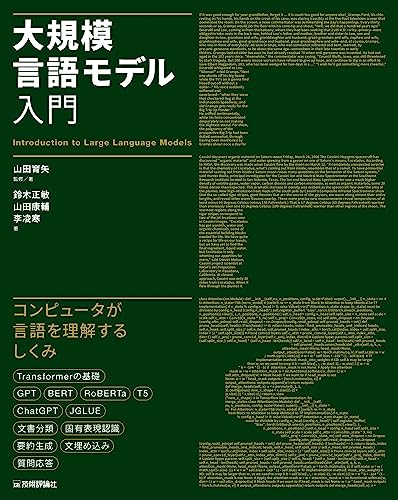
大規模言語モデル入門
¥3,520
1. Multimodal LLMs: Beyond Text
One of the most transformative shifts in the LLM space is the move toward multimodal models — AI systems that can process and generate not just text, but also images, audio, video, and code simultaneously.
What Is Multimodality?
A multimodal LLM can, for example, analyze a photograph and answer questions about it, listen to a voice recording and summarize it, or watch a short video and generate a script based on the content. This represents a fundamental leap from purely text-based models.
Real-World Example: OpenAI's GPT-4o
OpenAI's GPT-4o (the "o" stands for "omni") is a landmark multimodal model. Released in mid-2024, it can seamlessly handle text, audio, and images in a single unified model, with response times as low as 232 milliseconds — comparable to human conversational latency. Businesses like Duolingo and Khan Academy have integrated GPT-4o to deliver richer, more interactive educational experiences.
Real-World Example: Google Gemini Ultra
Google's Gemini Ultra set a new benchmark by scoring 90.04% on the MMMU (Massive Multitask Language Understanding) test, surpassing human expert performance for the first time. Its ability to reason across text, images, and code makes it invaluable for complex engineering and research workflows.
Multimodal LLMs are expected to power the next generation of applications in medical imaging analysis, autonomous vehicles, and immersive AR/VR environments.
2. Agentic AI: LLMs That Take Action
Perhaps the most exciting — and slightly unnerving — trend is the rise of agentic AI. Rather than simply responding to a single prompt, agentic LLMs can plan, execute multi-step tasks, use external tools, browse the internet, write and run code, and even spawn sub-agents to complete complex workflows autonomously.
How Agentic Systems Work
An agentic LLM operates within a loop:
- Perceive the environment (read documents, check APIs, browse the web)
- Plan a sequence of actions to achieve a goal
- Execute each action using tools
- Reflect on results and adjust the plan
This architecture, popularized by frameworks like LangChain and AutoGen, enables LLMs to act as autonomous "employees" capable of handling entire workflows.
Real-World Example: Devin by Cognition AI
Devin, developed by Cognition AI, made headlines in early 2024 as the world's first "AI software engineer." It can resolve 13.86% of real-world GitHub issues end-to-end without human assistance — a number that sounds modest but represents a massive leap over previous models, which resolved less than 2%. Companies are actively piloting Devin to handle bug fixes, code reviews, and documentation generation at scale.
The shift to agentic AI has massive implications for productivity. McKinsey estimates that AI agents could automate tasks accounting for up to 70% of employee time in certain knowledge work roles by 2030.
For those looking to dive deeper into the theory and practice of autonomous AI systems, books on AI agents and autonomous systems offer excellent foundational knowledge.
3. Small Language Models (SLMs): Efficiency Over Scale
For years, the dominant philosophy in AI was simple: bigger is better. More parameters, more data, more compute. But 2025 has seen a significant counter-movement: the rise of Small Language Models (SLMs).
Why Small Models Matter
SLMs are designed to run efficiently on edge devices — smartphones, laptops, embedded systems — without relying on cloud infrastructure. This has profound implications for privacy, latency, and cost.
Key examples include:
- Microsoft Phi-3-Mini (3.8 billion parameters): Achieves performance comparable to GPT-3.5 on many benchmarks while running on a standard laptop
- Meta's Llama 3 (8B): An open-source powerhouse that delivers 10x better performance per compute dollar than its predecessors
- Apple's OpenELM: Designed specifically for on-device inference on iPhones and Macs
Comparison Table: Leading LLMs in 2025
| Model | Developer | Parameters | Multimodal | Open Source | Best Use Case |
|---|---|---|---|---|---|
| GPT-4o | OpenAI | ~1.8T (est.) | ✅ | ❌ | Enterprise, creative work |
| Gemini Ultra 1.5 | Google DeepMind | ~1T (est.) | ✅ | ❌ | Research, coding, multimodal |
| Claude 3.5 Sonnet | Anthropic | ~70B (est.) | ✅ | ❌ | Long-context reasoning |
| Llama 3 70B | Meta | 70B | ✅ (vision) | ✅ | Open-source deployment |
| Phi-3-Mini | Microsoft | 3.8B | ❌ | ✅ | Edge devices, cost-efficiency |
| Mistral 7B | Mistral AI | 7B | ❌ | ✅ | Lightweight, customizable |
| Command R+ | Cohere | ~104B (est.) | ❌ | ❌ | RAG, enterprise search |
This table highlights how the LLM ecosystem has diversified. There's no one-size-fits-all solution — the right model depends on your use case, budget, and infrastructure.
4. Retrieval-Augmented Generation (RAG): Grounding LLMs in Facts
One of the most persistent criticisms of LLMs is hallucination — generating confident-sounding but factually incorrect responses. Retrieval-Augmented Generation (RAG) has emerged as a leading solution.
How RAG Works
RAG combines LLMs with a live document retrieval system. When a user asks a question, the system first searches a knowledge base (documents, databases, websites) for relevant information, then feeds that information to the LLM to generate a grounded, citation-backed answer.
This approach reduces hallucination rates by up to 62% according to a 2024 study by the University of Washington, and dramatically improves performance on domain-specific tasks like medical diagnosis support, legal research, and financial analysis.
Advanced RAG Techniques in 2025
The field has evolved well beyond basic RAG:
- Graph RAG: Uses knowledge graphs to improve multi-hop reasoning
- Agentic RAG: Combines RAG with tool use and planning loops
- Self-RAG: The model decides when to retrieve and how to evaluate retrieved content
For developers and engineers building production RAG systems, practical guides to building LLM applications are an invaluable resource to understand the nuances of vector databases, chunking strategies, and reranking algorithms.
5. Long-Context Windows: Processing Entire Books at Once
Context window — the amount of text an LLM can process at once — has grown exponentially. While GPT-3 had a context window of just 4,096 tokens (roughly 3,000 words), today's frontier models push this boundary dramatically:
- Gemini 1.5 Pro: Up to 1 million tokens (~750,000 words, or roughly 10 full-length novels)
- Claude 3.5: Up to 200,000 tokens
- GPT-4 Turbo: Up to 128,000 tokens
This breakthrough enables entirely new applications: analyzing entire legal contracts in one shot, processing years of financial reports, ingesting complete codebases for debugging, or reviewing extensive medical histories for personalized treatment suggestions.
However, long context doesn't come free. Processing 1 million tokens costs significantly more in compute, and research shows that "lost in the middle" problems — where models struggle to recall information from the middle of very long contexts — remain an active area of research.
6. LLM Safety, Alignment, and Regulation
As LLMs grow more powerful, so does the urgency around AI safety and alignment — ensuring these systems behave in ways that are helpful, harmless, and honest.
Key Developments in 2025
- Constitutional AI (CAI): Anthropic's Claude models use a set of guiding principles ("constitution") to self-evaluate and refine outputs, resulting in significantly fewer harmful outputs compared to RLHF-only models
- EU AI Act:

