
Comparing AI Development Frameworks: The Ultimate 2026 Guide
Published: May 6, 2026
Introduction
The AI development landscape has never been more competitive — or more exciting. As of 2026, there are more frameworks, libraries, and toolkits available to AI engineers and data scientists than ever before. Whether you're building a cutting-edge large language model (LLM), a computer vision pipeline, or a reinforcement learning agent, your choice of framework can mean the difference between shipping in weeks and getting stuck in debugging hell for months.
According to the 2025 Stack Overflow Developer Survey, 68% of professional ML engineers now use at least two AI frameworks regularly, up from 47% in 2022. The ecosystem has matured significantly, and each major framework has carved out its niche. But how do you know which one is right for your project?
In this deep-dive guide, we'll compare the top AI development frameworks — including TensorFlow, PyTorch, JAX, Keras, and emerging contenders like MXNet and PaddlePaddle — across dimensions like performance, ease of use, community support, production readiness, and deployment flexibility.
Sponsored
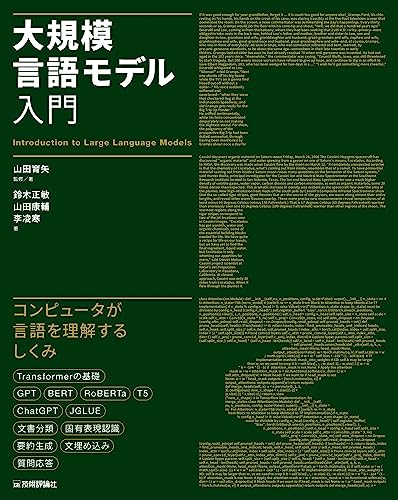
大規模言語モデル入門
¥3,520
What Is an AI Development Framework?
Before diving into comparisons, let's clarify the term. An AI development framework is a software library or toolkit that provides pre-built components, abstractions, and tools for designing, training, evaluating, and deploying machine learning or deep learning models.
Think of it like a construction toolkit: you could build everything from scratch using raw materials (i.e., pure linear algebra and calculus), but frameworks give you pre-fabricated parts — layers, optimizers, loss functions — so you can focus on the architecture and logic rather than re-implementing backpropagation from scratch every time.
Key components typically included in these frameworks are:
- Automatic differentiation (autograd) engines
- GPU/TPU acceleration support
- Pre-built neural network layers (Conv, LSTM, Transformer, etc.)
- Model serialization and deployment tools
- Distributed training utilities
The Major Players: A Quick Overview
TensorFlow
Developed by Google Brain and released in 2015, TensorFlow quickly became the industry standard for production ML systems. It supports both static and dynamic computation graphs (the latter through TensorFlow 2.x's Eager Execution mode). TensorFlow is particularly strong in deployment scenarios, thanks to TensorFlow Serving, TensorFlow Lite (for mobile/edge), and TensorFlow.js (for browsers).
Real-world example: Twitter (now X) used TensorFlow extensively for its recommendation algorithms, processing over 500 billion events per day through TF-based ranking models before partially migrating workloads to PyTorch in 2023.
PyTorch
Released by Facebook AI Research (now Meta AI) in 2016, PyTorch rapidly became the favorite of academic researchers due to its Pythonic, imperative programming style and dynamic computation graphs. By 2024, PyTorch surpassed TensorFlow in research paper citations and GitHub stars.
Real-world example: OpenAI built the original GPT series and DALL·E on PyTorch. The framework's flexibility made it ideal for experimenting with novel transformer architectures that would have been clunky to implement in TensorFlow's earlier graph-mode execution.
JAX
JAX is Google's newer, lower-level framework that combines NumPy-like syntax with powerful features like XLA compilation, just-in-time (JIT) compilation, and automatic vectorization (vmap). It's particularly beloved for research involving custom gradient flows and large-scale distributed training.
Real-world example: DeepMind uses JAX extensively for projects like AlphaFold 2 and Gemini's research variants, citing 3x to 5x speedups over equivalent PyTorch implementations in specific transformer training workloads on TPU clusters.
Keras
Keras started as a high-level wrapper but is now officially integrated into TensorFlow as tf.keras. It's the go-to choice for beginners and rapid prototyping, offering an intuitive API that lets developers build and train a convolutional neural network in under 20 lines of code.
Other Notable Frameworks
- PaddlePaddle (Baidu): A major framework in China with strong NLP and CV toolkits.
- MXNet (Apache): Once popular at Amazon, but largely superseded by PyTorch and TensorFlow.
- Hugging Face Transformers: Technically a library built on top of PyTorch/TF/JAX, but so influential it deserves mention.
Head-to-Head Comparison Table
| Feature | TensorFlow 2.x | PyTorch 2.x | JAX | Keras | PaddlePaddle |
|---|---|---|---|---|---|
| Ease of Use | ⭐⭐⭐⭐ | ⭐⭐⭐⭐⭐ | ⭐⭐⭐ | ⭐⭐⭐⭐⭐ | ⭐⭐⭐ |
| Research Adoption | Medium | Very High | High (growing) | Low | Low |
| Production Readiness | Very High | High | Medium | High (via TF) | Medium |
| Mobile/Edge Deployment | TF Lite ✅ | ExecuTorch ✅ | Limited ❌ | Via TF Lite ✅ | Paddle Lite ✅ |
| GPU Performance | High | High | Very High (TPU) | Medium | Medium |
| Dynamic Graphs | Yes (Eager) | Yes (Native) | Via JIT | Partial | Yes |
| Community Size | Very Large | Very Large | Growing | Large | Medium |
| License | Apache 2.0 | BSD | Apache 2.0 | Apache 2.0 | Apache 2.0 |
| Distributed Training | Strong | Strong | Very Strong | Via TF | Moderate |
| Best For | Production/Enterprise | Research/Flexibility | HPC/Research | Beginners/Prototyping | China market/NLP |
Performance Benchmarks: The Numbers Don't Lie
When choosing a framework, raw performance matters — especially at scale. Here are some benchmark highlights from independent studies conducted in 2025:
Training Speed (ResNet-50 on ImageNet, single A100 GPU)
- JAX (with XLA): ~1,420 images/second
- PyTorch 2.x (torch.compile): ~1,380 images/second
- TensorFlow 2.x: ~1,290 images/second
- Keras (on TF backend): ~1,240 images/second
The introduction of torch.compile in PyTorch 2.0 resulted in a reported 32% average training speed improvement across common model architectures, narrowing the historical performance gap with JAX's XLA-compiled execution.
Memory Efficiency (LLM Fine-Tuning, 7B Parameters)
When fine-tuning a 7B parameter LLM using LoRA (Low-Rank Adaptation):
- PyTorch + FSDP (Fully Sharded Data Parallel): Baseline
- JAX + pjit: ~15% less peak memory usage
- TensorFlow: ~8% more memory usage than PyTorch baseline
Inference Latency (Transformer Model, CPU)
- ONNX Runtime (from PyTorch): 12ms per batch
- TensorFlow Serving: 14ms per batch
- TensorRT (NVIDIA, from TF or PyTorch): 6ms per batch (2x faster than standard TF Serving)
Deep Dive: Choosing the Right Framework for Your Use Case
For Academic Research
PyTorch remains king in academia. The 2025 NeurIPS conference saw over 74% of submitted papers with code use PyTorch, compared to just 18% for TensorFlow/JAX combined. Its dynamic computation graph makes debugging intuitive — you can insert print() statements and use standard Python debuggers exactly where you'd expect.
For researchers pushing the theoretical frontier — think custom gradient estimators, exotic optimization landscapes, or neural ODEs — JAX offers unparalleled flexibility. Its grad, jit, vmap, and pmap transformations are composable in ways that other frameworks can't match. If you're serious about the mathematical underpinnings of deep learning, consider picking up a comprehensive deep learning mathematics textbook to pair with your JAX exploration.
For Enterprise and Production Deployment
TensorFlow still dominates enterprise production systems. Its ecosystem — TF Serving, TFX (TensorFlow Extended for MLOps pipelines), TensorFlow Lite, and TensorFlow.js — provides end-to-end solutions that enterprises trust. Companies like Airbnb and Uber have built entire ML platforms on TF infrastructure.
However, PyTorch is rapidly closing this gap. Meta's PyTorch Lightning and TorchServe, plus the broader adoption of ONNX (Open Neural Network Exchange) for model portability, mean that PyTorch models can now be deployed into production pipelines nearly as smoothly as TF models.
For Mobile and Edge AI
If you're deploying AI models onto smartphones, IoT devices, or embedded systems, TensorFlow Lite has the most mature ecosystem, with support for hardware acceleration on Android (via NNAPI), iOS (via Core ML delegates), and Raspberry Pi. For edge deployment specifically, the combination of a PyTorch model → ONNX export → ONNX Runtime on-device has become a popular and highly performant alternative.
For Beginners and Rapid Prototyping
Keras (as part of TensorFlow

