Practical Guide to Retrieval‑Augmented Generation (RAG) for 2026‑Ready AI
Published: October 26, 2026
Introduction
Retrieval‑Augmented Generation (RAG) has moved from a research curiosity to a production‑grade building block for enterprise‑scale AI. By pairing a Large Language Model (LLM) with an external knowledge base, RAG lets you answer questions with up‑to‑date, factual information while still benefiting from the fluent language generation of modern LLMs.
In 2026, the market for RAG‑powered solutions is projected to exceed $9.86 billion by 2030, underscoring its strategic importance for customer‑support bots, regulatory‑compliance assistants, and knowledge‑management platforms【4】.
This practical guide walks you through every step of a RAG pipeline—from data ingestion to prompt engineering, from open‑source tooling to cloud‑native services—so you can build, evaluate, and ship a reliable RAG system today.
Sponsored
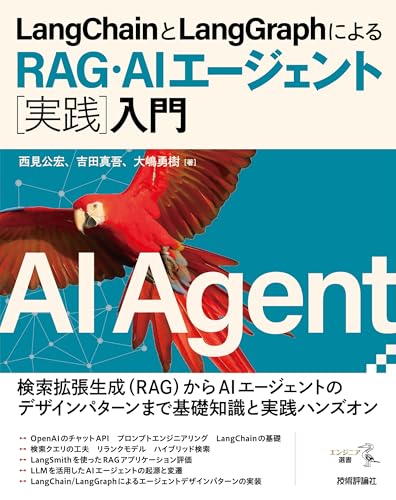
LangChainとLangGraphによるRAG・AIエージェント[実践]入門
¥3,960
TL;DR: RAG = Retrieve relevant documents → Inject them into the prompt → Generate an answer. The trick is making each step fast, accurate, and safe.
1. What Is Retrieval‑Augmented Generation?
At its core, RAG augments a generative LLM with a retrieval module that fetches external text snippets (often called chunks). The LLM never “remembers” the entire knowledge base; instead it dynamically pulls the most relevant pieces and conditions its generation on them.
Key benefits:
| Benefit | Why It Matters |
|---|---|
| Up‑to‑date knowledge | LLM weights are static; retrieval gives you the latest facts without retraining. |
| Reduced hallucinations | Grounding generation in real documents curbs fabricated answers. |
| Data privacy & compliance | Sensitive data stays in your own store; the model only sees what you retrieve. |
| Parameter efficiency | Smaller LLMs can achieve “large‑model” performance when paired with a strong retriever. |
The classic RAG pipeline looks like this (as described by Command Code)【2】:
- Store documents in an external vector store (e.g., Pinecone, Weaviate).
- Encode each document into dense embeddings.
- Receive a user query.
- Encode the query and search for the top‑k nearest document chunks.
- Inject those chunks into the LLM prompt.
- Generate the final answer.
Only the query and the retrieved chunks reach the LLM—never the whole corpus.
2. Core Components of a RAG System
Below is a quick‑reference table of the most widely adopted tools for each pipeline stage (open‑source and cloud‑native).
| Stage | Open‑Source Options | Cloud / Managed Services | Notable Strength |
|---|---|---|---|
| Document Ingestion | LangChain (document loaders) LlamaIndex (data connectors) |
AWS Kendra, Azure Cognitive Search | Flexible connectors for PDFs, web pages, DBs |
| Embedding Generation | Sentence‑Transformers, OpenAI embeddings, Mistral‑Embed | Amazon Bedrock Embedding, Google Vertex AI Embedding | High‑quality dense vectors, low latency |
| Vector Store / Retrieval | FAISS, Pinecone, Weaviate, Milvus | AWS OpenSearch, Azure Vector Search, Google Vertex AI Matching Engine | Scalable ANN search, metadata filtering |
| Prompt Engineering | LangChain PromptTemplates, LLM‑Hub | Azure OpenAI Prompt Studio, Bedrock Prompt Designer | Reusable prompt patterns, few‑shot examples |
| LLM Generation | Llama 2, Mistral‑7B, OpenAI GPT‑4o | Amazon Bedrock, Azure OpenAI, Google Gemini | Choice of open‑source vs. managed models |
| Evaluation & Monitoring | Eval‑LLM, RAG‑Eval, Haystack Eval | AWS SageMaker Model Monitor, Azure Monitor for AI | Automated quality metrics, drift detection |
Pro tip: For a quick PoC, combine LangChain for ingestion, FAISS for local vector search, and OpenAI’s GPT‑4o for generation. This stack runs on a single laptop and demonstrates the full RAG loop.
3. Step‑by‑Step Implementation
3.1. Data Collection & Cleaning
- Identify the knowledge source – internal SOPs, product manuals, public FAQs, or regulatory documents.
- Normalize formats – Convert PDFs, DOCX, HTML, and CSV files to plain text. Tools like Apache Tika or LangChain’s built‑in loaders make this painless.
- Chunking strategy – Split documents into 200‑‑400‑word segments. Overlap by 30 % to preserve context.
Why chunk? LLM context windows (e.g., 8 k tokens for GPT‑4o) limit how many words you can feed at once. Smaller, overlapping chunks improve recall during retrieval.
3.2. Embedding Generation
Select an embedding model that balances semantic richness and cost:
| Model | Dimensionality | Cost (per 1 M tokens) | Typical Use‑Case |
|---|---|---|---|
| Sentence‑Transformer all‑mpnet‑base‑v2 | 768 | Free (open‑source) | General‑purpose documents |
| OpenAI text‑embedding‑3‑large | 1536 | $0.00013 | High‑accuracy enterprise search |
| Mistral‑Embed | 1024 | Free (self‑hosted) | Low‑latency on‑prem pipelines |
Run the encoder over every chunk, store the resulting vectors in a vector DB (FAISS for local dev, Pinecone for production).
from sentence_transformers import SentenceTransformer
model = SentenceTransformer('all-mpnet-base-v2')
embeddings = model.encode(chunks, batch_size=64, show_progress_bar=True)
vector_store.upsert(ids=chunk_ids, vectors=embeddings, metadata=chunk_meta)
3.3. Retrieval Mechanics
When a query arrives:
- Encode the query using the same embedding model.
- Perform a nearest‑neighbor search (usually top‑k = 5‑10).
- Apply metadata filters (e.g., only “Legal” documents).
FAISS example:
D, I = index.search(query_embedding, k=5)   # D: distances, I: IDs
retrieved_chunks = [chunks[i] for i in I[0]]
3.4. Prompt Construction
A well‑crafted prompt tells the LLM what to do with the retrieved evidence. A reliable pattern looks like:
You are a knowledgeable assistant for [Company]. Answer the question using ONLY the provided sources. Cite each fact with the source ID.

[Source 1] ----
<chunk text>
[Source 2] ----
<chunk text>

Question: <user query>
Answer:
Few‑shot examples (showing a correct citation style) further reduce hallucinations.
3.5. Generation
Send the composed prompt to your LLM. For production, use a managed endpoint (e.g., Amazon Bedrock or Azure OpenAI) to benefit from auto‑scaling and built‑in request throttling.
response = bedrock.invoke_model(
    modelId='anthropic.claude-v2',
    body={'prompt': final_prompt, 'maxTokens': 512}
)
3.6. Post‑Processing & Safety
- Citation extraction – Parse the model’s output to ensure each fact maps to a source ID.
- Hallucination filter – If a citation is missing, fallback to “I’m not sure” or ask the model to regenerate.
- Content moderation – Run the final answer through a profanity or PII filter before returning it to the user.
4. Real‑World Examples
4.1. Microsoft Copilot for Microsoft 365
Microsoft integrates a RAG layer over its internal SharePoint and OneDrive knowledge stores. When a user asks Copilot to “summarize the latest Q3 earnings call,” the system retrieves the transcript, slides, and analyst notes, then feeds them to a GPT‑4‑style model to produce a concise briefing. This approach keeps the response grounded in the actual earnings documents rather than relying on the model’s static knowledge.
4.2. Kyndi’s Regulatory Compliance Assistant
Kyndi (a fintech AI startup) built a RAG pipeline that pulls the latest SEC filings and FINRA rules from a curated database. The LLM then answers compliance questions for traders, citing the exact regulation number and clause. The solution reduced manual research time by 70 % and dramatically lowered the risk of mis‑interpretation.
4.3. Shopify’s Customer‑Support Bot
Shopify deployed a RAG‑enhanced chatbot that accesses the company’s Help Center articles, partner API docs, and merchant onboarding guides. When merchants ask “How do I set up Shopify Payments in Canada?” the bot retrieves the relevant policy page, embeds the excerpt, and generates a step‑by‑step guide with direct links to the source. The bot’s first‑contact resolution rate climbed from 58 % to 84 % within three months.
These examples illustrate how RAG can be tailored to distinct domains—enterprise productivity, financial regulation, and e‑commerce support—while delivering trustworthy answers.
5. Scaling RAG for Enterprise
5.1. Hybrid Retrieval: Sparse + Dense
- Sparse (BM25) works well for exact keyword matches and legal phrasing.
- Dense (vector) captures semantic similarity.
A hybrid approach first runs BM25 for quick filtering, then dense ANN search on the reduced set. This reduces latency and improves precision, a pattern highlighted in the 2026 market analysis【4】.
5.2. Multi‑Modal Retrieval
Beyond text, modern RAG pipelines also ingest images, tables, and code snippets. By converting non‑text modalities into embeddings (e.g., CLIP for images, Tabular Transformers for tables), you can answer queries like “Show me the trend of sales in Q2 2025” using a chart image stored in a data lake.
5.3. Continuous Learning Loop
- Log each query, retrieved chunks, and the final answer.
- Collect user feedback (thumbs‑up/down, correction).
- Retrain the retriever (or fine‑tune the embedding model) weekly based on relevance signals.
This feedback loop keeps the system aligned with evolving user needs without retraining the LLM itself.
5.4. Security & Compliance
- Encryption at rest for vector stores (AES‑256).
- Access control via IAM roles—only authorized services can query the knowledge base.
- Data residency: Choose a region‑specific vector service (e.g., Azure Europe) to meet GDPR.
6. Evaluation Metrics for RAG
| Metric | Definition | Typical Threshold |
|---|---|---|
| Recall@k | Fraction of queries where the correct document appears in top‑k retrieved chunks. | ≥ 0.85 for k = 5 |
| Precision@k | Fraction of retrieved chunks that are truly relevant. | ≥ 0.80 |
| BLEU / ROUGE | N‑gram overlap between model answer and ground‑truth reference. | Domain‑dependent |
| Citation Accuracy | Percentage of facts correctly linked to a source ID. | ≥ 0.90 |
| Latency | End‑to‑end response time (query → answer). | ≤ 2 seconds for interactive use |
Use tools like Eval‑LLM or RAG‑Eval to automate these tests on a held‑out benchmark set (e.g., a sample of 1 000 real support tickets).
7. Common Pitfalls & How to Avoid Them
| Pitfall | Why It Happens | Remedy |
|---|---|---|
| Retriever returns irrelevant chunks | Poor embedding quality or insufficient training data. | Fine‑tune the encoder on domain‑specific triplets; use hybrid retrieval. |
| Hallucinated citations | LLM “makes up” source IDs when it can’t find a match. | Enforce a citation check post‑processor that discards any answer lacking a valid ID. |
| Context window overflow | Too many retrieved chunks exceed token limit. | Limit to top‑k = 3‑5 high‑score chunks; summarize chunks before injection. |
| Latency spikes | Vector DB cold starts or network latency. | Keep the vector store warm with periodic ping; use edge‑cached embeddings. |
| Data drift | Knowledge base evolves faster than the retriever adapts. | Schedule nightly re‑indexing and incremental embedding updates. |
8. Choosing the Right Stack – A Quick Decision Tree
flowchart TD
    A[Do you need on‑prem security?] -->|Yes| B[Self‑host FAISS + LlamaIndex + Open‑source LLM]
    A -->|No| C[Managed vector store (Pinecone/Weaviate) + Bedrock or Azure OpenAI]
    B --> D[Low‑budget PoC or regulated industry]
    C --> E[Scalable SaaS product]
If you’re budget‑constrained or operating in a highly regulated environment, a self‑hosted stack (FAISS + LlamaIndex + an open‑source LLM like Llama 2) gives you full control. For fast‑to‑market SaaS solutions, the managed route (Pinecone + Bedrock) reduces ops overhead.
9. Further Reading & Resources
-
Books (Amazon links) that dive deeper into RAG concepts:
- Retrieval‑Augmented Generation: Theory and Practice – A comprehensive textbook covering embeddings, retrieval algorithms, and prompt design.
- Building Knowledge‑Grounded Conversational AI – Real‑world case studies from enterprise deployments.
- Prompt Engineering for LLMs – Practical patterns for injecting retrieved context.
-
Online tutorials: LangChain’s “RAG from Scratch” notebook, LlamaIndex’s “Enterprise Knowledge Base” guide.
-
Community: Join the RAG‑Engineers Slack channel, follow the #rag tag on Hacker News for the latest breakthroughs.
Conclusion
Retrieval‑Augmented Generation is no longer a research prototype; it’s a must‑have architecture for any organization that wants factual, up‑to‑date AI assistants. By:
- Storing documents externally,
- Retrieving the most relevant pieces on‑the‑fly, and
- Generating answers grounded in those pieces,
you can deliver trustworthy AI experiences that scale across domains—from finance to e‑commerce, from internal knowledge bases to public‑facing chatbots.
Start small: pick a single knowledge source, spin up a LangChain‑FAISS PoC, and iterate on retrieval quality and prompt design. As you refine relevance and citation accuracy, migrate to a managed vector store and a higher‑capability LLM to meet production SLAs.
Ready to build your own RAG system? Grab one of the books above, explore the open‑source stacks, and unleash the power of grounded generation for your business today.
Stay curious, stay grounded, and let the retrieval do the heavy lifting while your LLM focuses on the language. 🚀
Related Articles
- LangChain vs LlamaIndex: A Practical Guide for 2024
- Practical Guide to RAG: Retrieval-Augmented Generation Explained
- Expanding Context Windows: Techniques and Trade-offs
This article was created using generative AI.